Ever wonder what makes some aluminum parts so incredibly strong and reliable? The term "forged aluminum1" often comes up, but what does it really mean? It’s more than just aluminum; it’s a process that transforms it.
Forged aluminum alloy is aluminum that has been shaped under immense pressure, typically using dies and a forging press or hammer. This process refines the grain structure and enhances its strength, ductility, and fatigue resistance compared to other manufacturing methods.
At SWA Forging, we specialize in manufacturing large-diameter forged rings and forged discs from various aluminum alloys. Since 2012, we've been supplying these high-quality, customized solutions to clients worldwide, particularly traders and machining companies in the Middle East. Understanding what "forged aluminum alloy" truly means is key to appreciating the superior components we produce. So, let's explore this.
What is the Aluminium alloy for forging?
Choosing the right material for forging is critical, isn't it? Not all aluminum is created equal when it comes to the intense forging process. Certain alloys are specifically designed for this.
Aluminum alloys best suited for forging typically possess good ductility and strength characteristics that can be enhanced by the forging process and subsequent heat treatment. Common examples include alloys from the 2xxx, 6xxx, and 7xxx series.
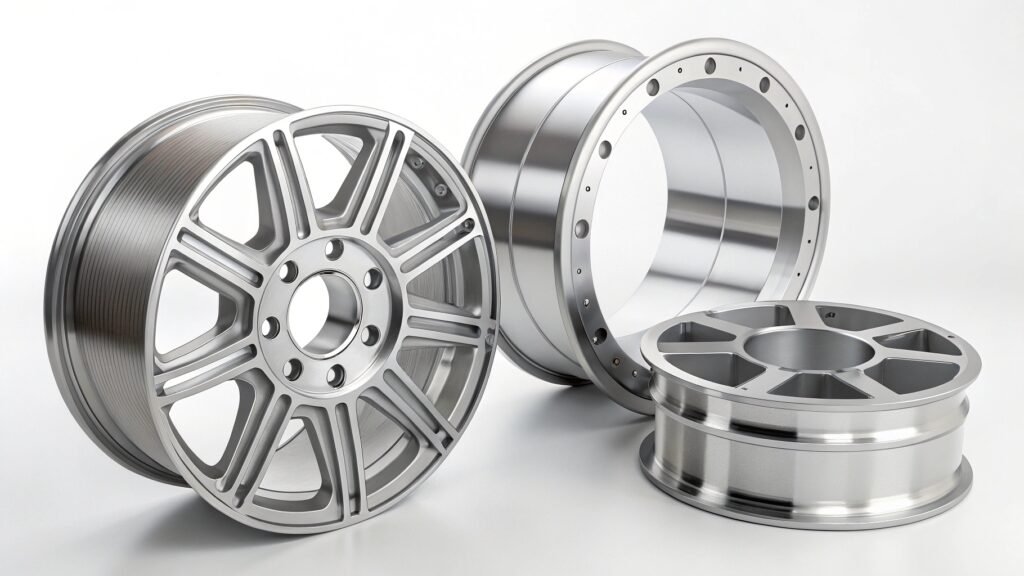
When we talk about aluminum alloys suitable for forging, we're looking for materials that can withstand the significant plastic deformation involved and whose properties can be optimized by this process. Here are some of the go-to series we often work with at SWA Forging:
- 6xxx Series (e.g., 6061, 6082): These alloys, with magnesium and silicon as primary alloying elements, are workhorses. 6061 is particularly popular due to its excellent combination of good strength (especially after T6 heat treatment), good forgeability, weldability, corrosion resistance, and machinability. We produce many forged rings and discs from 6061 for diverse industrial applications.
- 7xxx Series (e.g., 7075, 7050): These are high-strength alloys, primarily using zinc as the main alloying element, often with magnesium and copper. 7075-T6, for instance, offers strength comparable to some steels, making it ideal for aerospace and high-stress applications. Forging these alloys helps achieve their peak mechanical properties.
- 2xxx Series (e.g., 2014, 2618): These alloys use copper as the principal alloying element. They are known for their high strength, particularly at elevated temperatures (for some alloys like 2618). They are often used in aerospace and high-performance automotive components.
The choice of alloy depends heavily on the end-use requirements: strength, corrosion resistance, machinability, operating temperature, and cost. Our clients, both traders and machining companies, rely on us to source and forge the correct alloy grade to meet their specific project needs, complete with product quality certificates.
Is forged aluminum stronger than aluminum?
You hear "forged aluminum" and assume it's better, but is it really stronger than just plain "aluminum"? It’s a fair question. The process itself makes a huge difference to the final strength.
Yes, forged aluminum is typically significantly stronger and more durable than cast aluminum or aluminum in its un-worked or annealed state. The forging process refines the grain structure, eliminates porosity, and aligns the grain flow, enhancing mechanical properties.
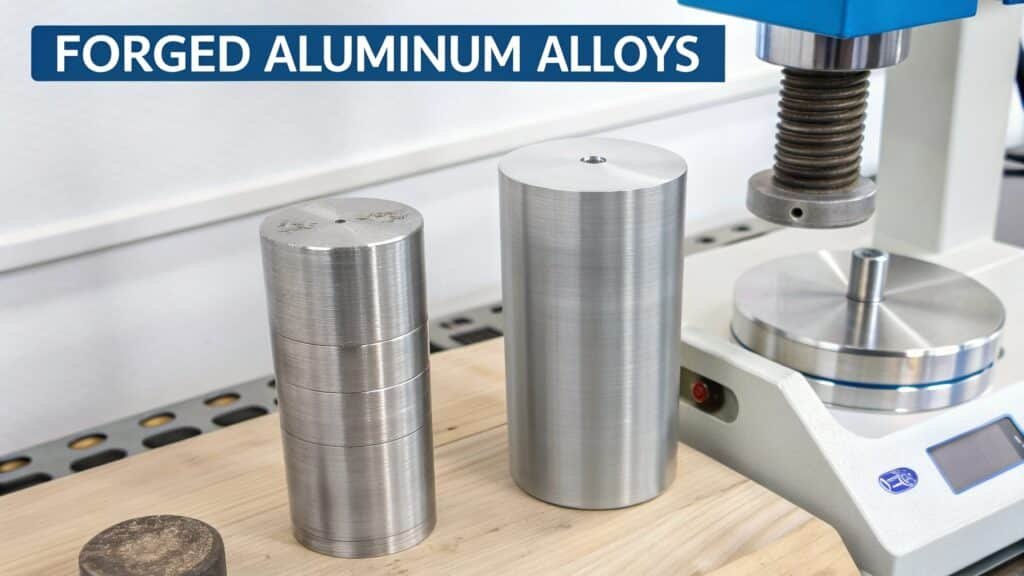
When we say "aluminum," it can refer to the raw element or an alloy in various forms. Forging takes a good aluminum alloy and makes it even better. Here's why:
- Refined Grain Structure: The immense pressure used in forging breaks down the coarse, non-uniform grain structure that might be present in a cast billet. This creates a fine, uniform grain structure. Finer grains generally mean higher strength and toughness.
- Elimination of Porosity: Casting processes can sometimes leave behind tiny internal voids or pores. The compressive forces in forging effectively squeeze these voids shut, resulting in a denser, more solid material. This improves strength and fatigue resistance because pores can act as stress concentrators where cracks might initiate.
- Favorable Grain Flow: Forging allows us to direct the internal grain flow of the aluminum to follow the contours of the part. Think of it like the grain in wood – wood is strongest along its grain. By aligning the grain flow with the directions of principal stresses in the final component, we can significantly increase its strength and resistance to fatigue and impact. This is a unique advantage of forging.
- Improved Ductility and Toughness: While increasing strength, forging often also enhances ductility (the ability to deform without fracturing) and toughness (the ability to absorb energy before fracturing).
So, when our clients request forged aluminum rings or discs from SWA Forging, they're not just getting aluminum; they're getting an engineered material that has been mechanically improved for superior performance, reliability, and longevity in demanding applications. The strength improvement can be quite substantial, especially when combined with appropriate heat treatment (like the T6 temper for 6061).
What is the difference between extruded and forged aluminum?
Terms like "extruded" and "forged" both describe ways to shape aluminum, but they are very different. Understanding this helps you choose the right process for your component. What sets them apart?
Extruded aluminum is made by pushing a heated billet through a shaped die (like squeezing toothpaste). Forged aluminum is shaped by hammering or pressing a billet between dies. Forging generally offers superior multi-directional strength and grain structure.
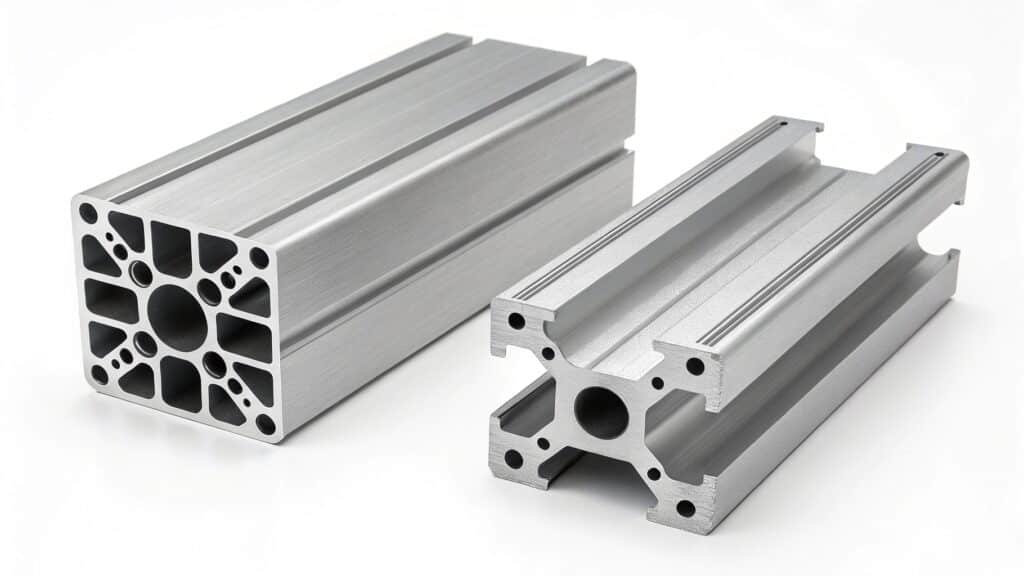
Both extrusion and forging are common methods for shaping aluminum alloys, but they result in products with different characteristics:
| Feature | Extruded Aluminum | Forged Aluminum |
|---|---|---|
| Process | Pushing heated billet through a die opening | Squeezing or hammering heated billet between dies |
| Shape | Continuous lengths with consistent cross-sections (e.g., profiles, tubes, bars) | Discrete parts, often more complex 3D shapes (e.g., rings, discs, connecting rods) |
| Grain Flow | Primarily longitudinal (along the extrusion direction) | Can be controlled to follow part contours, multi-directional strength |
| Strength | Good in the longitudinal direction; can be weaker transversely | Generally higher and more uniform strength in all directions |
| Internal Defects | Can have some internal stresses; generally sound | Excellent internal soundness, porosity eliminated |
| Cost | Tooling can be less expensive for simpler profiles; good for high volume of linear parts | Tooling can be more complex and costly; process can be slower for complex parts |
| Typical Use | Window frames, structural beams, heat sinks | High-stress components, critical parts (aerospace, automotive, industrial machinery) |
At SWA Forging, we specialize in forged products like large-diameter rings and discs. For these types of components, forging is often preferred because it provides superior mechanical properties, especially impact strength and fatigue resistance, due to the refined grain structure and controlled grain flow. While extrusion is excellent for creating long, consistent profiles, forging excels at producing strong, discrete parts that need to withstand significant operational stresses. Our machining customers often prefer our forged blanks because the material's integrity and uniform properties lead to better machining outcomes and more reliable final parts.
What is the strongest Aluminium alloy?
When you absolutely need the highest strength aluminum can offer, which alloy should you turn to? There are many options, but a few stand out for their exceptional mechanical properties.
The strongest commonly available aluminum alloys generally belong to the 7xxx series, with 7075 (often in a T6 or T7x temper) being one of the most well-known for its very high tensile and yield strength, comparable to some steels.
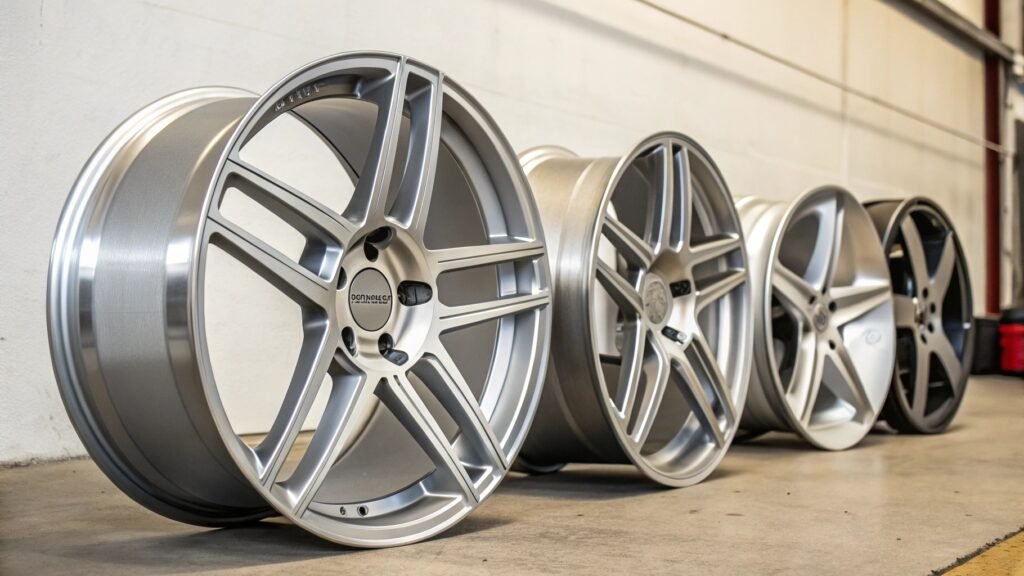
While "strongest" can be defined in various ways (tensile strength, yield strength, fatigue strength), the 7xxx series alloys are generally at the top when it comes to ultimate tensile strength and yield strength for aluminum.
- 7075: This alloy, with zinc as its primary alloying element along with magnesium and copper, can achieve ultimate tensile strengths exceeding 570 MPa (83,000 psi) in the T6 temper. This makes it a go-to choice for aerospace structural components, high-performance sporting goods, and other applications where maximum strength-to-weight ratio is critical.
- 7050 / 7055 / 7068: These are other 7xxx series alloys that offer even higher strengths or better combinations of strength, toughness, and stress corrosion cracking resistance compared to 70752 in certain tempers and applications. For example, 7068 can reach tensile strengths over 690 MPa (100 ksi).
- 2xxx Series: Some 2xxx series alloys, like 2024, also offer very high strength, particularly good fatigue resistance, and are widely used in aerospace applications.
It's important to remember that achieving this high strength often comes with trade-offs:
- Weldability: High-strength 7xxx series alloys are generally considered difficult to weld using common fusion techniques without significant loss of strength.
- Corrosion Resistance: Some high-strength alloys might be more susceptible to certain types of corrosion (like stress corrosion cracking) if not properly selected or treated for the environment.
- Cost: These high-performance alloys are typically more expensive than general-purpose alloys like 6061.
At SWA Forging, while we can and do forge high-strength alloys like those in the 7xxx series when specified by our clients for their demanding applications, a large volume of our work also involves versatile alloys like 6061, which offer an excellent balance of properties for a wider range of industrial uses. We always ensure our products meet the stringent quality standards and certifications our customers expect.
Conclusion
Forged aluminum alloy is a superior material, shaped by force to achieve enhanced strength and reliability. The specific alloy and forging process create components ready for tough jobs in many industries.