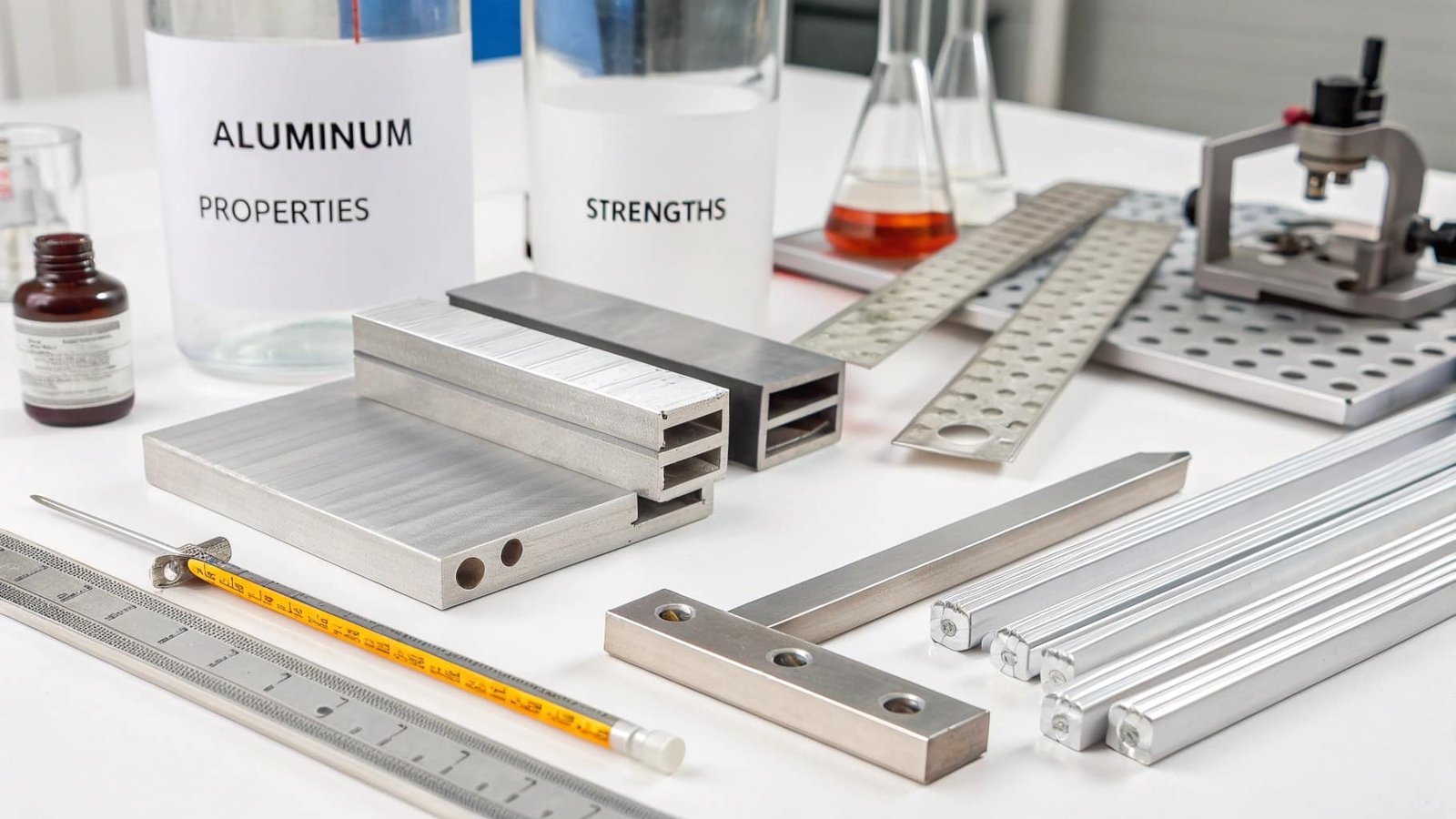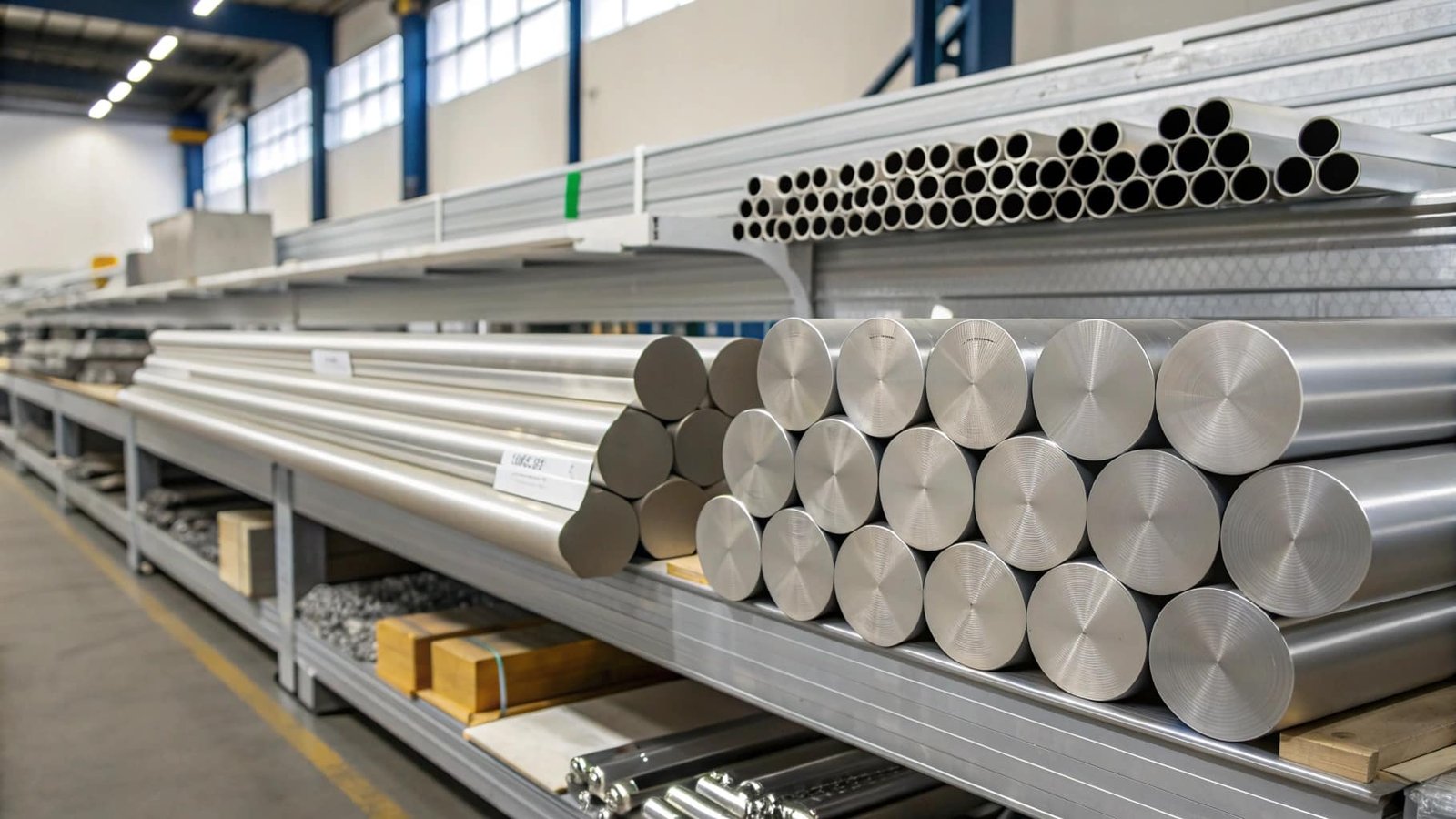
Have you ever wondered just how much weight or force an aluminum component can withstand before it bends, breaks, or permanently deforms? It's a critical question for engineers designing anything from airplane parts to structural supports.
The maximum load an aluminum component can withstand depends significantly on several factors: the specific aluminum alloy1 (e.g., 6061, 7075), its temper (heat treatment condition like -T6), the geometry and dimensions of the component (e.g., thickness, shape, presence of holes), and the type of loading (tension, compression, shear, bending, or fatigue). Generally, the load limit is determined by the material's yield strength (the point at which it begins to permanently deform) and its ultimate tensile strength (the point at which it fractures). For example, a 7075-T6 aluminum alloy can have an ultimate tensile strength of over 80,000 psi (550 MPa), but a designer will often use a fraction of this value (applying a safety factor) to ensure the part operates reliably without permanent deformation.
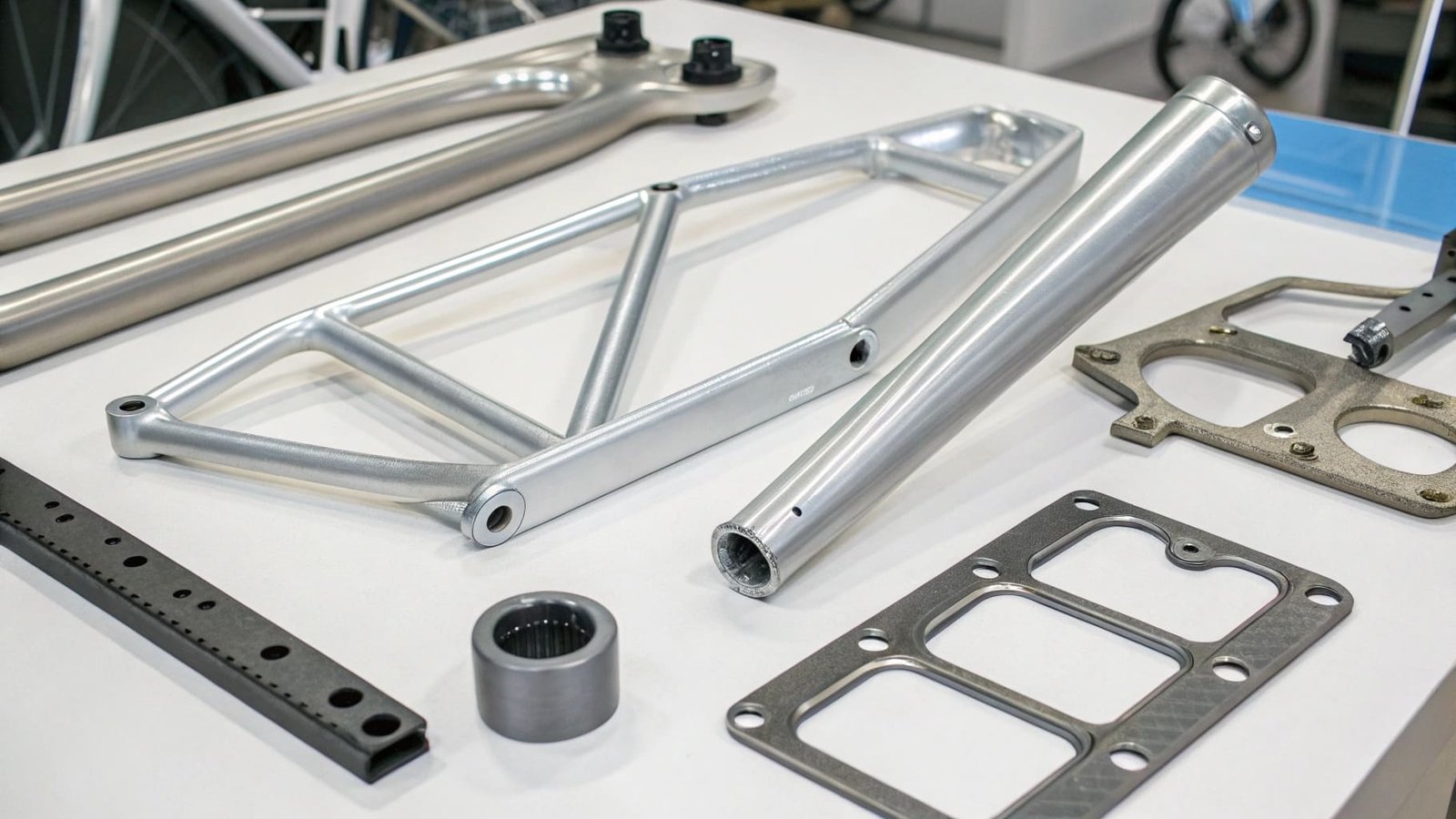
At SWA Forging, we specialize in producing high-integrity forged aluminum components, where maximizing load-bearing capacity is paramount. We understand how alloy selection and precise forging processes directly impact a component's ability to withstand significant forces, ensuring our products meet the stringent demands of our clients in critical applications.
What is the weight limit for aluminum?
Have you ever thought about how much weight a single piece of aluminum, like a beam or a plate, can hold before it fails? The idea of a "weight limit" is a simplification of complex engineering principles that consider far more than just the material itself.
There isn't a single "weight limit" for aluminum because its load-bearing capacity is highly dependent on the specific aluminum alloy (its inherent strength), its temper (heat treatment), the dimensions and shape of the component (e.g., cross-sectional area, length, presence of stiffeners), how the weight is applied (static, dynamic, concentrated, distributed), and the acceptable level of deformation or deflection. For example, a small, thin aluminum sheet might only hold a few pounds, while a large, thick aluminum beam made from a high-strength alloy can support many tons. Engineers use material properties like yield strength and ultimate tensile strength, combined with structural analysis, to calculate safe working loads for specific aluminum designs, often applying substantial safety factors.
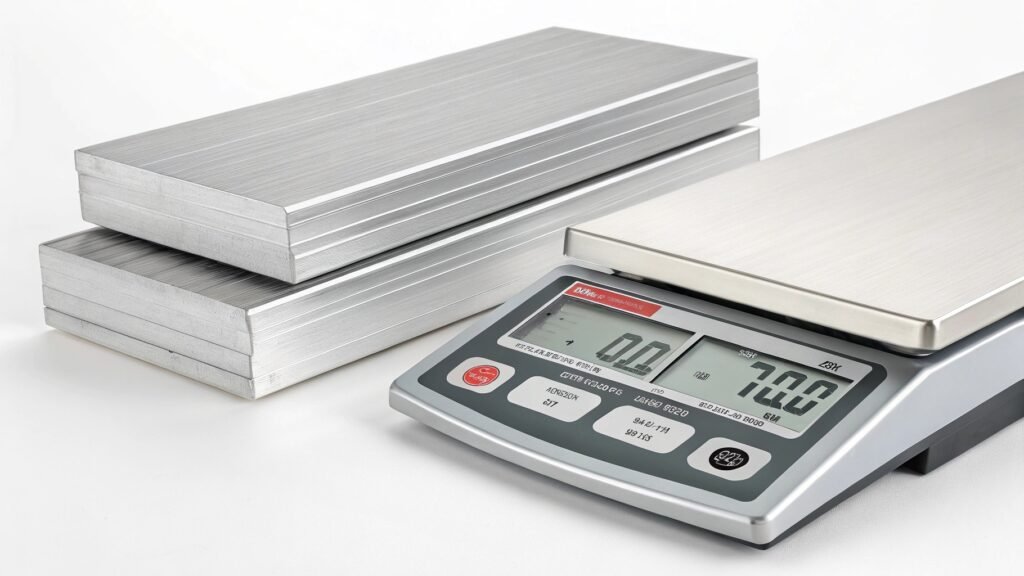
At SWA Forging, we constantly push the boundaries of aluminum's capabilities. Our focus is on manufacturing components that consistently exceed the expected "weight limit" for their given application, achieved through careful alloy selection and our advanced forging processes that enhance the material's inherent strength.
Determining the Load Capacity of Aluminum Components
Let's break down the factors that determine how much weight or load an aluminum part can withstand:
-
Material Properties:
- Alloy: Different aluminum alloys have vastly different strengths. For example, 1100 aluminum (pure) is very soft, while 7075 (a common aerospace alloy) is exceptionally strong.
- Temper: The heat treatment or "temper" significantly affects strength. For instance, 6061-O (annealed) is soft, while 6061-T6 (heat-treated and aged) is much stronger.
- Yield Strength (YS): This is the most crucial property for design. It's the maximum stress a material can withstand before it begins to permanently deform. For structural applications, engineers typically design so that the applied stress is well below the yield strength to prevent permanent bending or stretching.
- Ultimate Tensile Strength (UTS): This is the maximum stress a material can withstand before it fractures.
- Modulus of Elasticity (Young's Modulus): This property relates to stiffness. A higher modulus means the material will deform less under a given load, even if it doesn't permanently yield. Aluminum's modulus is about one-third that of steel.
-
Component Geometry:
- Cross-Sectional Area: A larger cross-sectional area (e.g., a thicker plate or a wider beam) can carry more load.
- Shape: The shape of a cross-section dramatically influences its strength and stiffness, especially against bending and buckling. For example, an I-beam or a hollow square tube is much stronger in bending than a solid rectangular bar of the same cross-sectional area.
- Length: For long, slender components under compression, buckling (a sudden instability) can be the limiting factor, not material strength. Longer columns are more prone to buckling.
- Presence of Features: Holes, notches, sharp corners, or abrupt changes in geometry can create stress concentrations, significantly reducing the effective load-carrying capacity.
-
Type of Loading:
- Tension: Pulling force.
- Compression: Pushing force. For short, stout components, material strength is key. For long, slender components, buckling is key.
- Shear: Force parallel to a surface (like cutting with scissors).
- Bending: Combination of tension and compression.
- Torsion: Twisting force.
- Fatigue: Repeated loading and unloading cycles, which can cause failure at stresses well below the static yield strength.
- Dynamic/Impact Loads: Sudden application of force, which can be more damaging than a static load.
-
Environmental Factors:
- Temperature: Aluminum's strength generally decreases at elevated temperatures.
- Corrosion: Can degrade material over time, reducing load capacity.
-
Safety Factors:
- Engineers always apply a safety factor to their calculations. This means they design parts to withstand loads significantly higher than the expected maximum operating load, accounting for uncertainties in material properties, manufacturing variations, unexpected loads, and environmental factors. For critical applications (e.g., aerospace), safety factors can be very high.
| Factor | How it Influences Load Limit | Example |
|---|---|---|
| Alloy & Temper | Determines intrinsic material strength (YS, UTS) | 7075-T6 (strongest) vs. 1100-O (weakest) |
| Cross-Sectional Area | Larger area = more material to resist force | Thicker plate holds more than thinner plate |
| Shape/Profile | Influences resistance to bending, buckling, torsion | I-beam stronger in bending than solid bar of same area |
| Length (for Compression) | Affects susceptibility to buckling | Long, thin column buckles more easily than short, thick one |
| Load Type | Different failure modes for tension, bending, fatigue | Part may withstand high static load but fail under repeated cycles |
| Temperature | Strength generally decreases at higher temperatures | Aircraft components designed for specific temperature ranges |
| Safety Factor | Design buffer for reliability and unforeseen circumstances | If max load is 1000 lbs, design for 2000 lbs (SF=2) |
Therefore, to know the "weight limit" or maximum load, a detailed engineering analysis of the specific component and its intended use is always required.
What is the maximum yield strength of aluminium?
Have you ever looked at an aluminum part and wondered just how much stress it can take before it permanently bends or deforms? This critical point is defined by its yield strength, and for aluminum, this property can vary enormously depending on the alloy and its treatment.
The maximum yield strength of aluminum can exceed 75,000 psi (517 MPa), with some specialized alloys reaching even higher values. The highest strengths are typically achieved by heat-treatable alloys, particularly those in the 7xxx series (aluminum-zinc-magnesium-copper alloys) like 7075-T62 or 7050-T7451. These alloys undergo solution treatment and artificial aging to precipitate strengthening phases within their microstructure, making them exceptionally strong. For context, common structural aluminum alloys like 6061-T6 have a yield strength around 35,000 psi (240 MPa), while non-heat-treatable alloys like 1100-O might only have a yield strength of 5,000 psi (35 MPa).
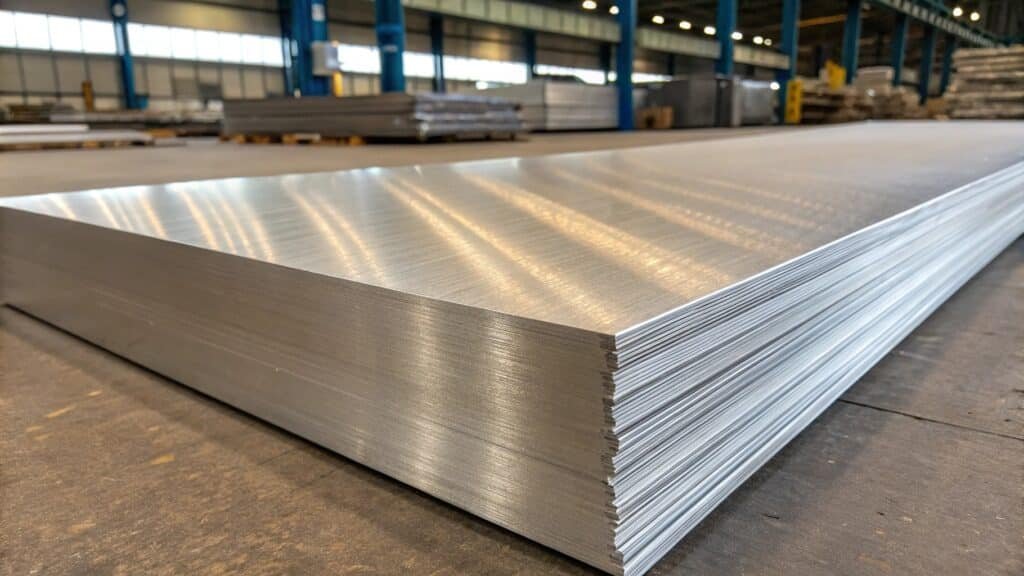
At SWA Forging, maximizing yield strength is a cornerstone of our manufacturing. We select high-strength alloys and utilize controlled forging processes that refine the grain structure, further enhancing the material's inherent yield strength, ensuring our components perform reliably under demanding loads.
Understanding Aluminum Yield Strength and How It's Achieved
Let's delve deeper into aluminum's yield strength:
-
Definition of Yield Strength:
- Yield strength (YS) is the stress at which a material begins to deform plastically (permanently). Beyond this point, the material will not return to its original shape when the load is removed.
- Importance: For most engineering designs, especially structural ones, the applied stress must remain below the material's yield strength to prevent permanent deformation or structural collapse.
-
Factors Influencing Yield Strength:
- Alloy Composition: The specific alloying elements (e.g., zinc, magnesium, copper, silicon) determine the base potential for strength.
- Heat Treatment (Temper): This is the most significant factor for heat-treatable alloys.
- Solution Treatment: Heating the alloy to a high temperature to dissolve alloying elements into a solid solution.
- Quenching: Rapidly cooling to "lock in" the solid solution.
- Aging (Precipitation Hardening): Heating to a lower temperature for a specific period, allowing fine precipitates to form within the microstructure. These precipitates block dislocation movement, making the material much stronger and harder. The "T" temper designations (e.g., T4, T6, T7) indicate specific heat treatment conditions.
- Work Hardening (Strain Hardening): Deforming the material at room temperature (e.g., by rolling, drawing, or forging) can increase its strength. This is common in non-heat-treatable alloys (e.g., H temper designations like H14, H32).
- Grain Structure: Fine, uniform grain structures, often achieved through processes like forging, can enhance both yield strength and toughness.
-
Examples of Yield Strengths for Common Aluminum Alloys:
| Aluminum Alloy (Typical Temper) | Primary Alloying Elements | Approximate Yield Strength (MPa / psi) | Notes |
|---|---|---|---|
| 1100-O | Pure Aluminum | 35 MPa / 5,000 psi | Soft, ductile, excellent corrosion resistance. |
| 3003-H14 | Manganese | 110 MPa / 16,000 psi | Moderate strength, good workability, corrosion. |
| 5052-H32 | Magnesium | 195 MPa / 28,000 psi | Good strength, excellent marine corrosion. |
| 6061-T6 | Magnesium, Silicon | 240 MPa / 35,000 psi | General purpose structural alloy, good strength. |
| 7075-T6 | Zinc, Magnesium, Copper | 517 MPa / 75,000 psi | Very high strength, aerospace applications. |
| 7050-T7451 | Zinc, Magnesium, Copper, Zirconium | 485 MPa / 70,000 psi (typical for thick plate) | Aerospace, high strength, better fracture toughness than 7075-T6. |
| 2024-T3 | Copper, Magnesium | 324 MPa / 47,000 psi | High strength, good fatigue resistance, aerospace. |
The maximum yield strength values are typically found in the 7xxx series alloys, which are used in applications demanding the absolute highest strength-to-weight ratios, such as in the aerospace industry.
How thick does aluminum need to be to walk on it?
Have you ever considered walking across a sheet of aluminum and wondered how thick it would need to be to support your weight without bending or collapsing? It's a question that brings together material properties, structural design, and basic physics.
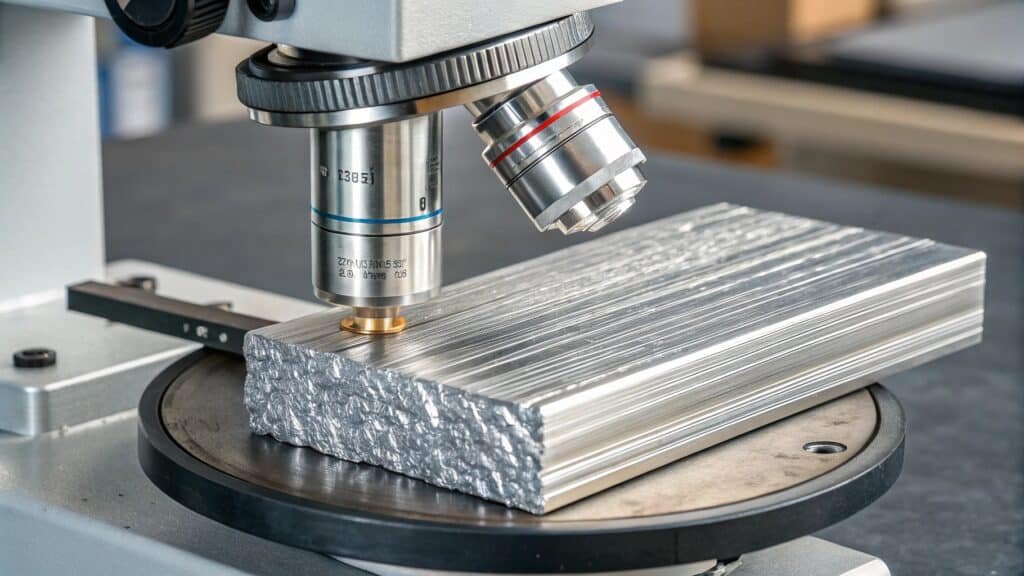
The thickness of aluminum needed to safely walk on it depends heavily on the aluminum alloy's strength (temper), the support span (distance between supports), and whether you're aiming for no noticeable deflection or just preventing collapse. For a person weighing 200 lbs (90 kg) walking on a 2 ft x 2 ft (0.6 m x 0.6 m) unsupported aluminum plate, an engineering analysis would show that a 0.25 inch (6.35 mm) thick 6061-T6 aluminum plate might support the weight without permanent deformation, but would likely have noticeable deflection. To feel stiff and rigid with minimal deflection, you might need 0.375 to 0.5 inches (9.5 to 12.7 mm) thick material. If the plate is smaller or has more supports underneath, a thinner gauge could suffice. Conversely, a larger span would require significantly thicker material or additional stiffeners.
At SWA Forging, while we don't produce flat sheets for walking on, we design and forge components that bear immense loads. We know that for structural applications, understanding deflection and rigidity is as crucial as preventing outright failure, ensuring a product not only holds weight but also performs as expected without excessive movement.
Factors Determining Aluminum Plate Thickness for Walking On
Let's break down the engineering considerations for supporting a person's weight on an aluminum plate:
-
Load:
- Weight of the person: (e.g., 200 lbs / 90 kg). For design, engineers often use a concentrated load.
- Impact factor: If someone walks or jumps, the dynamic load can be higher than their static weight.
-
Material Properties:
- Yield Strength: (e.g., 6061-T6 at 35,000 psi / 240 MPa). This determines if the plate will permanently bend.
- Modulus of Elasticity (Stiffness): (e.g., Aluminum is ~10 Mpsi / 69 GPa). This determines how much the plate will deflect (bend temporarily) under load. A stiffer material deflects less.
-
Plate Geometry:
- Span/Unsupported Length: This is the most critical factor. A longer span between supports will require a much thicker plate to prevent excessive deflection and permanent deformation. A 2-foot span is very different from a 5-foot span.
- Width: A wider plate can distribute the load over a larger area, increasing its effective stiffness.
- Support Conditions: How the plate is supported (e.g., simply supported on two edges, fixed on all four edges, or a cantilever) drastically affects its load-bearing capacity and deflection. A plate supported on all four sides will be much stiffer than one supported on only two.
-
Acceptable Deflection:
- Aesthetics/Comfort: Even if a plate doesn't yield, if it deflects too much, it will feel "bouncy" or "spongy" when walked on, which is undesirable for many applications (e.g., flooring). Building codes often specify maximum allowable deflections (e.g., L/360, where L is the span).
- Functionality: Excessive deflection could also cause issues with adjacent components or drainage.
Simple Example Calculation (Simplified for Illustration):
Consider a 200-pound person standing in the center of a 2 ft x 2 ft (24 in x 24 in) square plate of 6061-T6 aluminum, simply supported on all four edges.
- If you use a 0.125 inch (3.175 mm) thick plate: It might yield (permanently deform) and have very significant deflection, feeling extremely bouncy or collapsing.
- If you use a 0.25 inch (6.35 mm) thick plate: It will likely not yield, but the deflection could still be noticeable (e.g., 0.1 to 0.2 inches), making it feel somewhat bouncy.
- If you use a 0.375 inch (9.5 mm) thick plate: The deflection would be significantly reduced, and it would likely feel quite stiff.
- If you use a 0.5 inch (12.7 mm) thick plate: This would feel very rigid with minimal deflection.
| Factor | Impact on Thickness Requirement |
|---|---|
| Longer Span | Requires significantly thicker plate |
| Fewer Supports | Requires thicker plate |
| Higher Person Weight | Requires thicker plate |
| Desire for No Deflection | Requires much thicker plate (beyond yielding prevention) |
| Lower Strength Alloy | Requires thicker plate |
Therefore, while a thin plate (e.125 inch) might technically hold the weight in a very small, well-supported area, for practical walking surfaces with typical spans, you're looking at aluminum plate thicknesses of at least 1/4 inch (6.35 mm) to 1/2 inch (12.7 mm) or more, depending on the span and desired rigidity. For large spans, stiffeners or a structural design (like a truss or box beam) become more efficient than just increasing plate thickness.
Is aluminum stronger in tension or compression?
Have you ever considered whether a material performs better when pulled apart or pushed together? For many materials, the answer to whether they are stronger in tension or compression can vary, and aluminum is no exception, though its behavior is generally quite balanced.
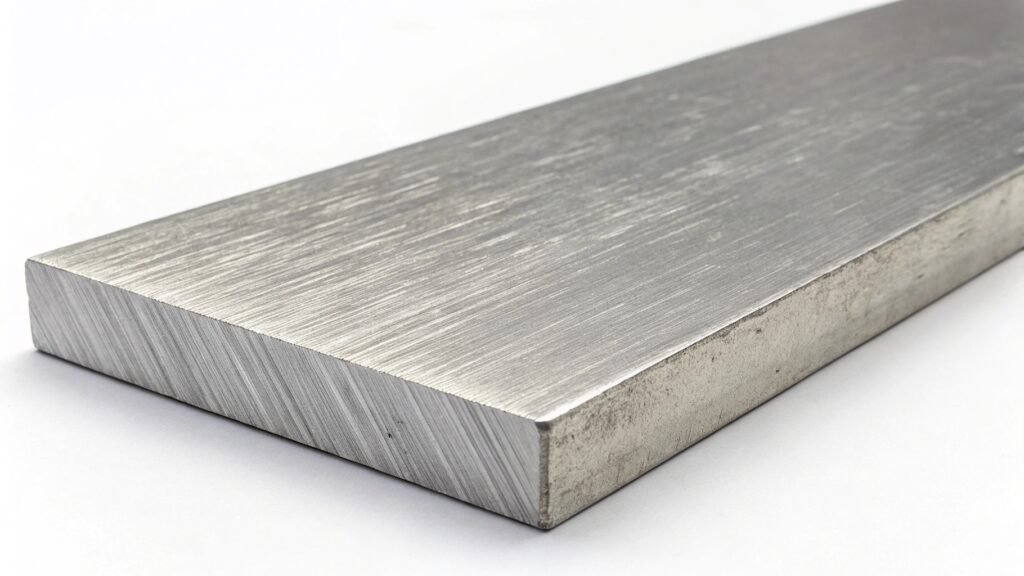
Aluminum alloys typically exhibit similar strength properties in both tension and compression, meaning their yield strength and ultimate strength values are often very close for both types of loading. However, for slender components under compression, the failure mode is often buckling rather than material compression failure. Buckling is a structural instability where the component suddenly deforms laterally, and it occurs at loads far below the material's compressive yield strength. Therefore, while the material itself has comparable inherent strength, the overall "strength" of an aluminum component in compression (especially a long, thin one) is usually limited by its geometry and susceptibility to buckling, making it appear "weaker" in compression in certain designs.
At SWA Forging, we meticulously design our forged aluminum components to withstand both tensile and compressive forces, often under complex loading conditions. We emphasize material integrity to ensure the inherent strength of the alloy is fully utilized, while always considering how component geometry impacts its performance, especially in compression where buckling can be a design limitation.
Understanding Tension vs. Compression Strength in Aluminum
Let's break down the nuances of aluminum's behavior under tensile and compressive loads:
-
Material Properties (Intrinsic Strength):
- Inherent Similarity: For most aluminum alloys, the true stress-strain curve is very similar in tension and compression up to the yield point. This means that the material itself has a very similar ability to resist being pulled apart or pushed together before it permanently deforms or fractures.
- Yield Strength (YS) & Ultimate Tensile Strength (UTS): When you look up material data sheets, you'll often find a single value for yield strength and ultimate tensile strength because the compressive yield strength and ultimate compressive strength are generally considered to be roughly equivalent.
- Exceptions/Nuances:
- Some alloys (e.g., certain 2xxx and 7xxx series) may show a slight difference, sometimes being marginally stronger in compression than in tension at the ultimate strength level, especially if they exhibit strong anisotropy due to manufacturing processes.
- For very brittle materials (not typical for aluminum), compressive strength can be significantly higher than tensile strength (e.g., concrete, ceramics). Aluminum, being ductile, behaves more symmetrically.
-
Structural Behavior (Buckling in Compression):
- The Key Differentiator: This is where the practical "strength" difference arises. When a slender column or thin plate made of aluminum (or almost any material, including steel) is subjected to a compressive load, it can suddenly buckle and fail laterally before the material itself reaches its compressive yield strength.
- What is Buckling: Buckling is a form of instability where the structure loses its straight shape and bends sideways, even if the material itself has not yielded or fractured. The critical buckling load depends heavily on the component's length, cross-sectional shape, and end support conditions, not just the material's inherent compressive strength.
- Why it Matters: A long, thin aluminum rod will fail by buckling under a relatively small compressive load, whereas it could withstand a much larger tensile load before stretching and breaking. Therefore, for slender geometries, aluminum structures are "weaker" in compression due to the phenomenon of buckling.
-
Tension vs. Compression Failure Modes:
| Load Type | Typical Failure Mode | Limiting Factor for Design |
|---|---|---|
| Tension | Stretching, necking (reduction in area), then fracture | Material's Ultimate Tensile Strength (UTS) |
| Compression | Short, Stocky Component: Material crushing/yielding. | Material's Compressive Yield Strength |
| Long, Slender Component: Buckling (lateral instability). | Geometric factors (length, cross-section, supports) determining buckling load |
In summary, the aluminum material itself has roughly equivalent inherent strength in tension and compression. However, when designing components, especially long or thin ones, the tendency for buckling means that the practical load-carrying capacity of aluminum in compression is often lower than in tension, making it appear "weaker" in compressive applications where buckling is a concern. Engineers must consider both material strength and structural stability (buckling) in their designs.
Conclusion
The maximum load an aluminum component can withstand depends on its alloy, temper, geometry, and type of loading, with higher-strength alloys like 7075-T6 offering significantly high yield and ultimate tensile strengths. There isn't a single "weight limit" for aluminum; it's determined by a detailed engineering analysis considering material properties, component geometry, and load type, always with a safety factor. The maximum yield strength for aluminum can exceed 75,000 psi (517 MPa) in specialized heat-treated 7xxx series alloys. For safely walking on an aluminum plate, a thickness of at least 0.25 to 0.5 inches (6.35 to 12.7 mm) of a strong alloy like 6061-T6 is generally needed, depending on the unsupported span and desired rigidity. While the aluminum material itself has similar inherent strength in tension and compression, the practical "strength" of slender aluminum components in compression is often limited by buckling, a structural instability, rather than the material's compressive yield strength.