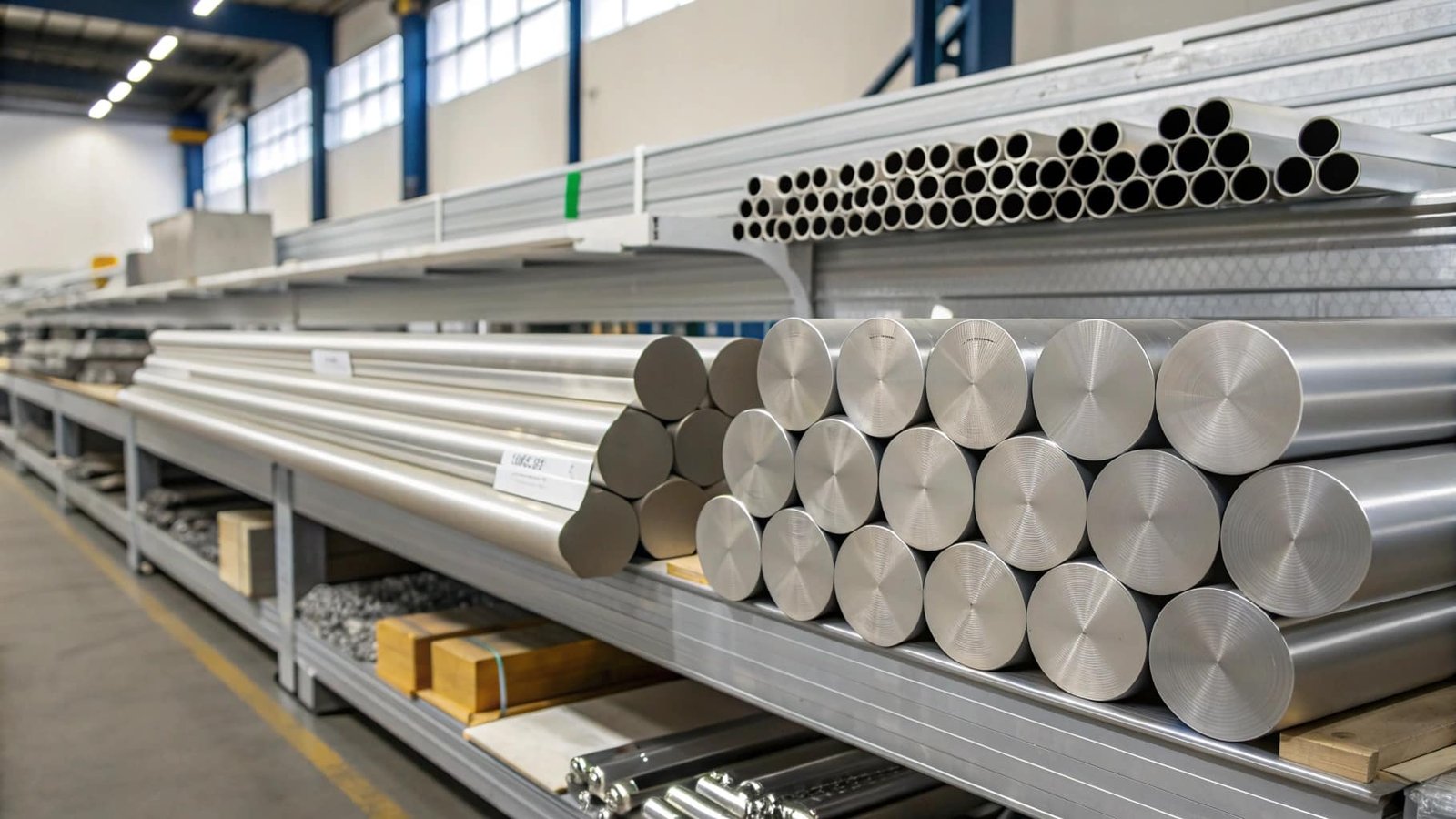
You're relying on aluminum tubes1 for critical parts. But you worry about their hidden weak points and whether they can truly handle the stresses of demanding aerospace or engineering applications.
The secret to the highest performance is not using a tube at all. It's machining your component from a solid forged aluminum ring or disc. This process creates a continuous grain structure that provides superior strength and integrity, eliminating the compromises inherent in tubing.
I often speak with clients who are searching for "high-performance" tubes. My first question is always about the final application. "High performance" isn't just about the alloy; it's about the manufacturing process. A tube's linear grain is a compromise made for production speed. For critical components, we explain that machining from a forged ring provides a continuous grain structure. This guarantees the ultimate strength and integrity that aerospace and general engineering demand.
What is the Strongest Aluminum Tubing Available?
You need the absolute strongest material for a high-stress part. You're looking at top-tier alloys but fear that the tube form itself might be the weak link in your design.
The strongest common aluminum alloy used for tubing is 7075. However, the ultimate strength of any tube is fundamentally limited by its linear grain structure, which is a result of the extrusion or drawing manufacturing process.
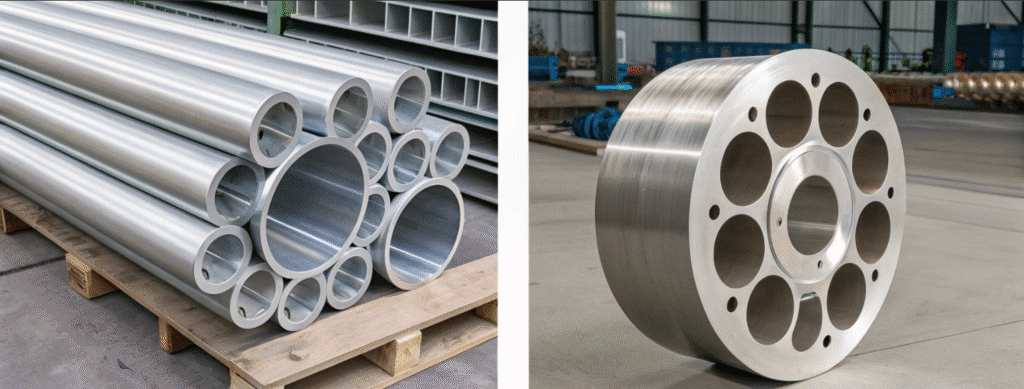
At SWA Forging, we work with the 7075 alloy2 extensively, but we emphasize that the alloy is only half the story. The manufacturing method is the other half. When you machine a complex part from a tube, you are cutting across its straight, linear grain flow. This creates weak points. For our machining customers who produce critical aerospace or automotive parts, we recommend starting with a forged blank. The forging process aligns the grain flow with the shape of the part, creating a continuous, unbroken internal structure. This provides superior fatigue resistance and impact strength that a standard tube can never match.
Why Forging Unlocks True Strength
| Manufacturing Method | Grain Structure Description | Resulting Part Integrity |
|---|---|---|
| Extruded/Drawn Tube | Linear: Grains are stretched in one direction, like a bundle of straws. | Good in the lengthwise direction, but weak when forces are applied across the grain. |
| Machined from Forging | Continuous & Contoured: Grains are oriented to follow the shape of the final part. | Superior, multi-directional strength and toughness. No inherent weak points from severed grains. |
This is why "high performance" is truly machined from a forging, not found in a tube.
Why Can Aluminum Tubing Be So Expensive?
You are getting quotes for high-quality seamless aluminum tubing3 and the price is much higher than expected. This makes it difficult to budget for your project or to remain competitive as a trader.
High-performance seamless aluminum tubing is expensive due to complex, multi-step manufacturing processes like extrusion and cold drawing. The need for specialized alloys, tight tolerances, and extensive quality testing further adds to the final cost.
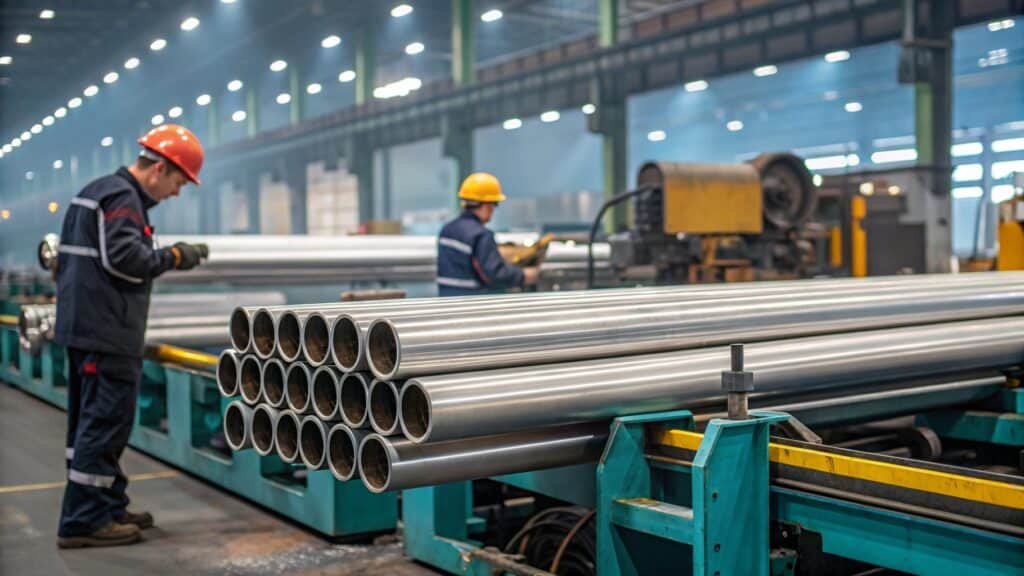
When our trading partners ask about the price of high-end tubing, I explain the economics of production. Creating a seamless tube isn't a simple process. It involves heating a billet, forcing it through a die over a mandrel, and often multiple subsequent 'drawing' steps to achieve the final dimensions and temper. This is energy-intensive and requires expensive equipment. Furthermore, for specialized alloys like 2024 or 7075, the raw material cost is higher. We offer an alternative: a custom-forged ring. For certain geometries, especially larger diameters, forging can be a more cost-effective starting point than sourcing a thick-walled seamless tube, while also providing a metallurgically superior product.
The Cost Factors of Tubing vs. Forging
- Manufacturing Complexity: Seamless tubing requires multiple precise steps (extrusion, drawing, heat treatment). Forging is a process of controlled deformation, which can be more direct for certain shapes.
- Material Waste (Scrap): If you need to machine a flange from a tube, all the material from the inside diameter becomes waste. Starting with a near-net-shape forged ring significantly reduces this expensive scrap.
- Tooling Costs: Both processes have tooling costs, but for standard ring sizes, our forging tools are readily available, offering a cost advantage over custom extrusion dies.
- Quality Assurance: High-performance tubing requires extensive non-destructive testing to check for internal flaws. Our forging process inherently produces a sound, uniform structure, which we verify with our standard quality inspections.
What Are the Different Types of Aluminum Tubes?
You are faced with terms like "extruded," "drawn," "seamless," and "welded." This variety makes it confusing to specify the right product, risking a poor choice that compromises quality or budget.
Aluminum tubes are primarily categorized by their manufacturing method. The main types are seamless tubes (extruded and drawn, with no seam) and welded tubes (formed from a sheet and joined with a weld), each offering different levels of integrity and cost.
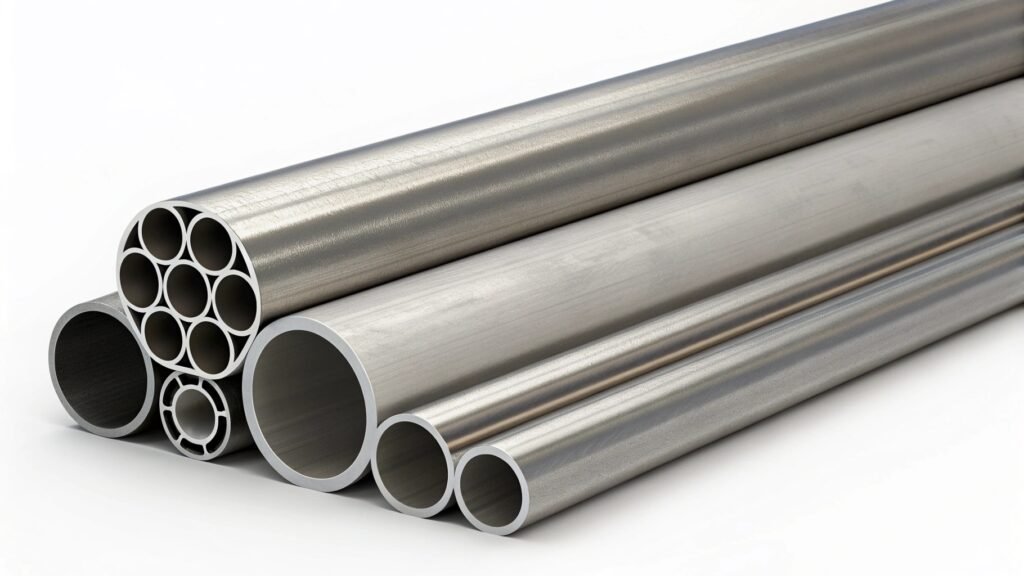
For our clients, understanding these types is crucial for making the right call. A welded tube is cost-effective but has a clear weak point: the weld seam. It's fine for low-pressure, structural applications. A seamless tube is much stronger because it has no seam, making it the standard for any pressure-bearing or high-stress application. However, as we discussed, even a seamless tube has the limitation of a linear grain structure. This is why we position our forged rings as the next level up—a "beyond seamless" solution for when performance is non-negotiable.
A Hierarchy of Integrity
-
Welded Tube:
- Process: A flat sheet is rolled and welded.
- Best For: Low-stress structural applications, decorative uses, conduit.
- Limitation: The weld is a potential point of failure and corrosion.
-
Extruded Seamless Tube:
- Process: A solid billet is pushed through a die to form the tube shape.
- Best For: General purpose applications, structural and fluid transfer.
- Limitation: Good integrity, but tolerances and surface finish may not be perfect.
-
Drawn Seamless Tube (Drawn Over Mandrel):
- Process: An extruded tube is pulled through smaller dies to improve dimensions and finish.
- Best For: High-performance applications requiring tight tolerances and smooth surfaces, like hydraulic lines.
- Limitation: High cost and linear grain structure.
-
Component Machined from a Forging:
- Process: A solid billet is shaped under immense pressure, then machined.
- Best For: The most critical applications where failure is not an option.
- Limitation: Best suited for ring-like or disc-like components, not long continuous tubes.
Conclusion
For ultimate performance, look beyond tubes. Machining critical components from a solid forged aluminum ring or disc provides the superior, continuous grain structure that guarantees maximum strength and reliability.