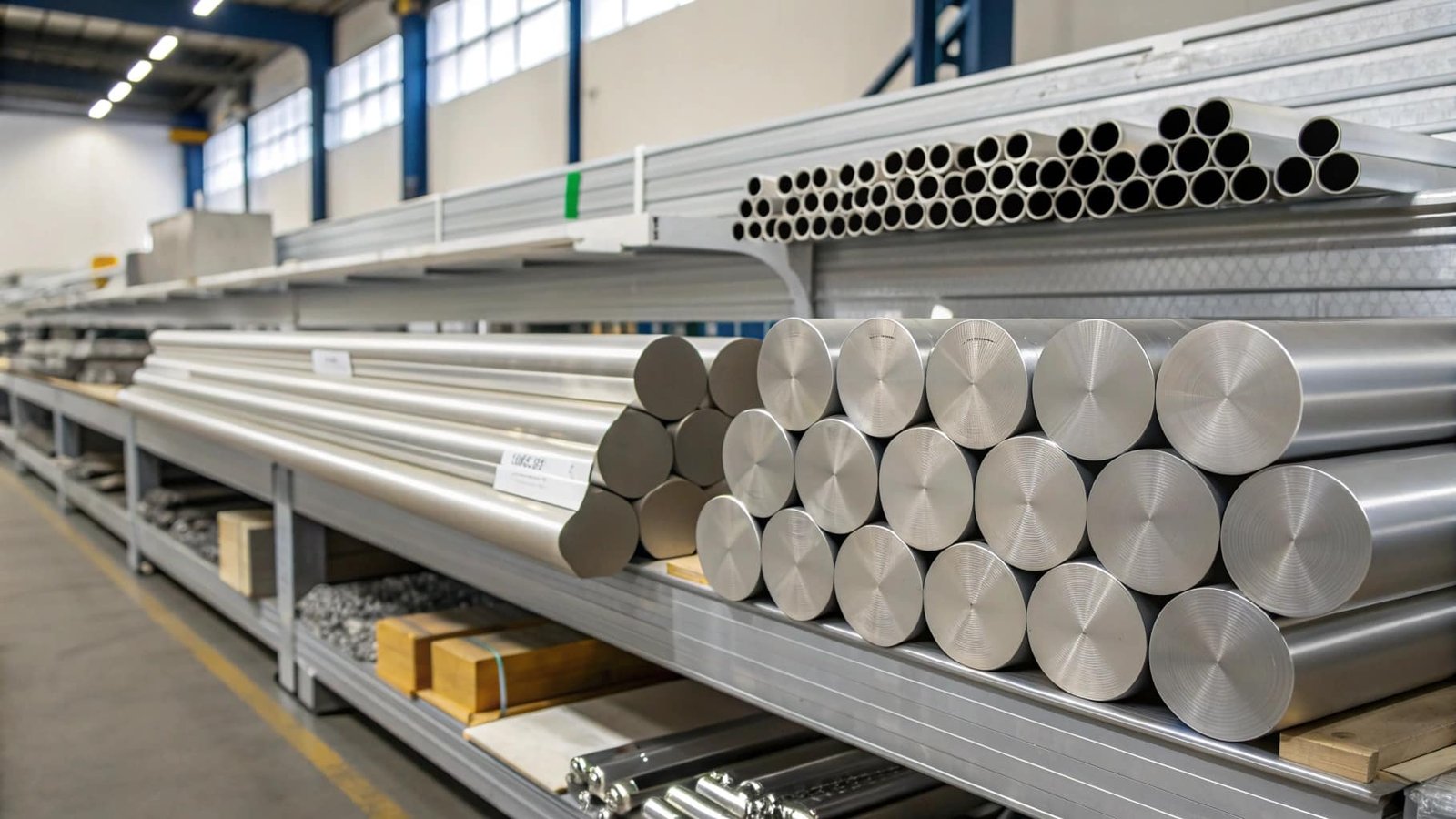
You see "forged ring" on a spec sheet and think it's just another metal part. This overlooks the engineered strength that makes it the only choice for high-stress industrial applications.
Large-diameter forged rings are essential where failure is not an option. Industries like aerospace, energy, and heavy machinery rely on them for their superior strength, structural integrity, and resistance to extreme operational stress, which are created by the forging process.
I've learned that just listing applications doesn't explain why these rings are so critical. The real insight is about how they are made. A large forged ring has a continuous circumferential grain flow. This creates an unbroken internal structure. It aligns the ring's strength perfectly to resist the immense tangential stress, or hoop stress, that would tear lesser materials apart. This isn't just a piece of metal; it is engineered integrity, and it's the core of what we deliver at SWA Forging.
What Are the Key Industrial Applications of Forging?
You know forging makes metal strong, but you're not sure where it is actually used. This makes it hard to identify new market opportunities or applications for your clients.
Forging is used to create critical components across many sectors. The five key industries that depend on large-diameter forged rings are aerospace, oil and gas, power generation, heavy machinery, and defense.
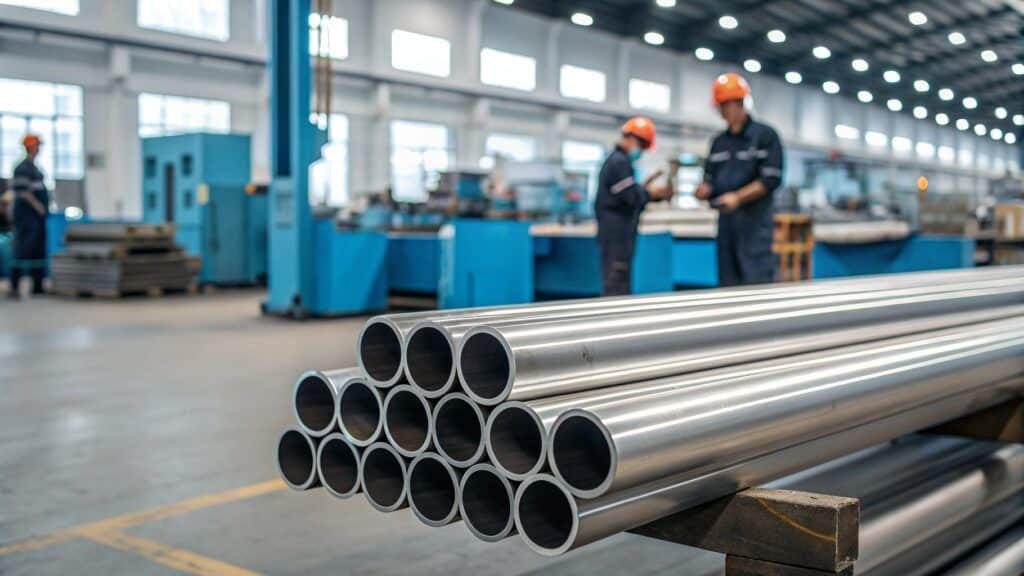
At SWA Forging, we supply rings to a wide range of clients, but they almost always fall into these major categories. The common theme is that these components operate under extreme conditions. For example, a trader we work with supplies forged rings to a company that services wind turbines. The main bearing in a turbine has to withstand incredible rotational forces and constant stress for years. A cast or welded part would fail due to internal defects or weak points. Only a forged ring has the uniform grain structure and internal soundness to provide that level of long-term reliability. Understanding these high-stakes applications is key to seeing the true value of a forged product. It is about providing a guarantee of safety and performance.
Top 5 Industries for Large Forged Rings
| Industry | Specific Application | Why Forging is Essential |
|---|---|---|
| Aerospace | Jet engine cases, landing gear components | High strength-to-weight ratio, resistance to fatigue and high temperatures. |
| Oil & Gas | Flanges, valve bodies, wellhead components | Superior corrosion resistance and ability to withstand high pressures. |
| Power Generation | Turbine and generator parts, bearing rings | Durability under extreme rotational stress and high temperatures. |
| Heavy Machinery | Large gears, bearings, crane slewing rings | Exceptional load-bearing capacity and resistance to wear and impact. |
| Defense | Missile components, submarine hull rings | Unmatched structural integrity and reliability for critical missions. |
What Are the Main Types of Industrial Forging?
You hear different terms like "open-die" and "closed-die" forging. This can be confusing and makes it difficult to understand which process is right for your specific component needs.
The four main types of forging are open-die, closed-die, impression-die, and seamless rolled ring forging. Each method offers a different balance of shape complexity, production volume, and cost.
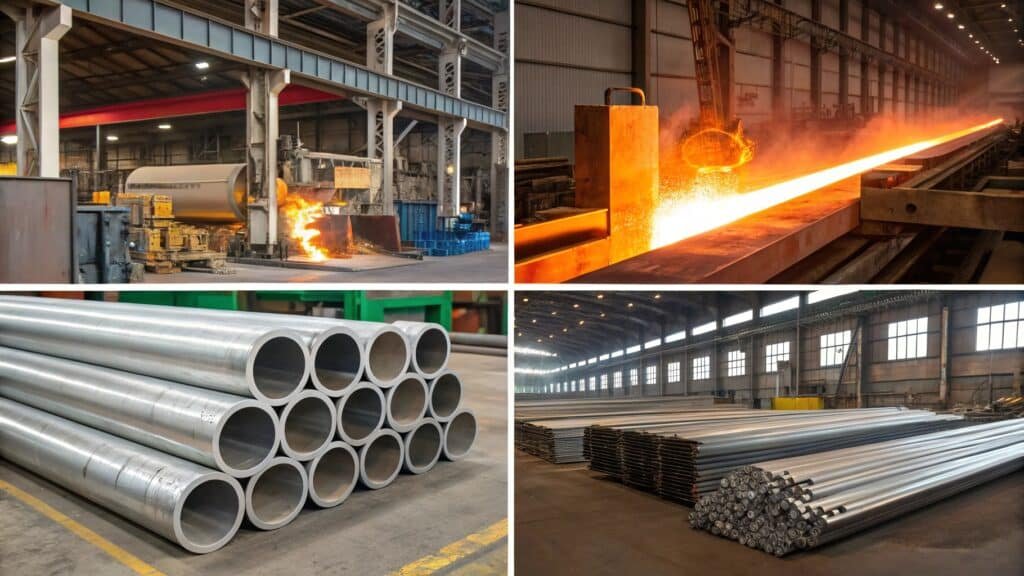
Thinking about these four types helps clarify what is possible with forging. Open-die forging is like a blacksmith with a high-tech hammer; it is great for large, simple shapes like our forged discs. Closed-die forging, or impression-die forging, is like making a coin. The metal is squeezed into a mold to create a precise, complex shape. This is ideal for high-volume production of identical parts. But for large rings, we use a specialized process. Seamless rolled ring forging is a unique method that gives us the superior properties our clients need. It's important to know the differences because the process determines the final strength and internal structure of the part. We help our clients choose the right process to get the performance they need at the best value.
Understanding the Four Methods
- Open-Die Forging: Metal is shaped between flat dies. It allows for large parts but offers less precise dimensional control.
- Impression-Die Forging: Metal is placed in a die that contains a precise impression of the desired part. It offers high precision for complex parts.
- Closed-Die Forging: A variation where the workpiece is completely enclosed in the die, producing very high precision and net-shape parts.
- Seamless Rolled Ring Forging: A specialized process to create rings, which we will look at next.
What Makes a Seamless Rolled Ring So Strong?
You understand that forged rings are strong, but you don't know why. Understanding the "why" helps you explain the value of these premium components to your own customers.
A seamless rolled ring's strength comes from its unique manufacturing process. It creates a continuous, circular grain flow with no weak spots or weld seams, perfectly aligning the material's strength against operational stress.
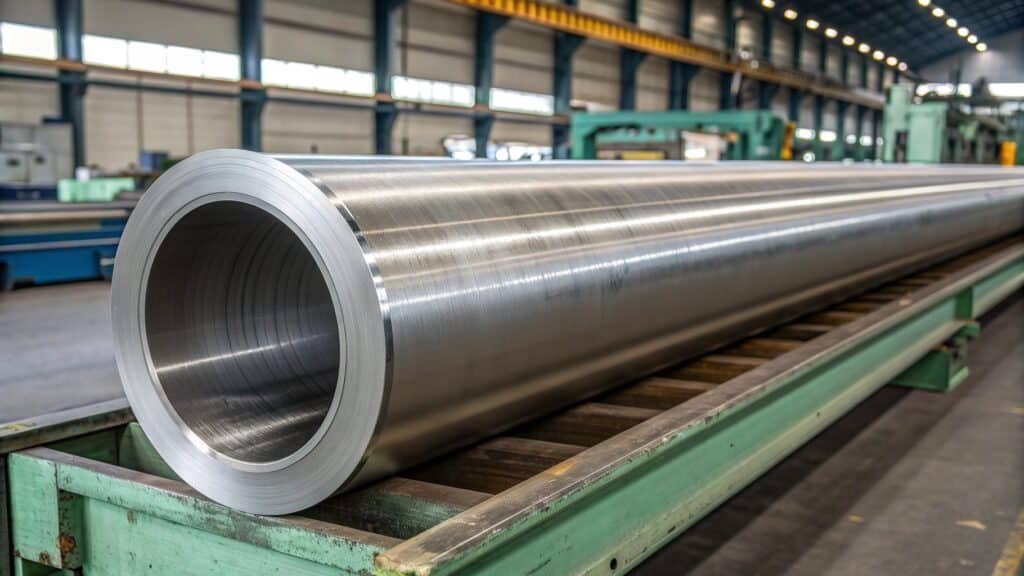
This is the most important concept for our large-diameter rings. We start with a forged disc and pierce a hole in the center, creating a donut shape. Then, we heat it and place it on a ring rolling mill. The mill applies pressure, causing the ring to grow in diameter and shrink in wall thickness. This process does something incredible to the metal's internal structure. It forces the grains of the metal to stretch and align in a circular direction. This continuous, unbroken grain flow is what gives the ring its immense "hoop strength." It means there are no weak points, no weld lines that could fail, and no random grain boundaries. The strength is oriented exactly where the stress is highest in applications like bearings or pressure vessels. It’s a perfect example of engineering a material for its purpose.
How Does the Basic Industrial Forging Process Work?
You want to understand the fundamentals of how forging transforms a simple block of metal. This basic knowledge can help you have more confident technical discussions with your suppliers and customers.
Industrial forging uses immense compressive force to shape metal, usually when it is hot. This process refines the metal's grain structure, eliminates defects, and improves its mechanical properties like strength and toughness.
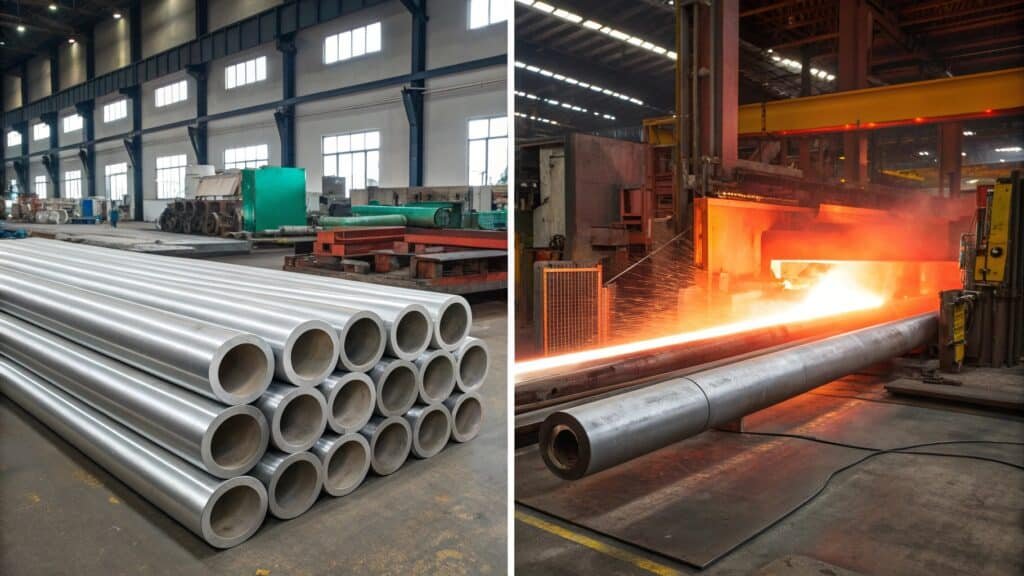
I like to explain it as a three-step process. First, we start with a high-quality aluminum alloy billet, which we inspect carefully. We then heat this billet to a precise temperature, making it malleable but not molten. This is a critical step; the temperature must be perfect for the specific alloy. Second, we place the hot billet onto a large hydraulic press and use dies to apply controlled pressure. This is the forging itself. The immense force compresses the metal, closing any internal voids and starting to shape the grain structure. Third, after the part has been shaped, it is cooled under controlled conditions. This, along with subsequent heat treatments, locks in the desired mechanical properties like hardness and tensile strength. Every step is monitored to ensure the final product meets the highest quality standards, complete with certifications.
Conclusion
A forged ring's continuous grain flow provides engineered integrity. It aligns strength to resist hoop stress in applications where failure is not an option, guaranteeing safety and performance.