You trust the spec sheet for your aluminum plate, but a hidden void can scrap a complex part mid-machining. This costs you time, money, and your reputation for quality.
The textbook density of aluminum is ~2700 kg/m³. But true, reliable density means zero internal defects. At SWA Forging, our forging process guarantees a fully solid, void-free material, eliminating machining risks and ensuring the density you expect is the density you get, every time.
I've had countless conversations with machining clients who have been burned by this exact problem. They purchase material based on a data sheet, only to discover—often after hours of expensive CNC time1—that theoretical density doesn't always equal actual density. For them, density is not an academic number; it's a direct measure of financial risk. This is why we don't just sell a material with a certain density. We sell the certainty of it. Our forging process guarantees a void-free, fully consolidated material, ensuring that every cut reveals solid metal, not a hidden, costly defect.
What Is the Density of Aluminum in kg/m³?
You need precise weight calculations for your project. Using a generic number for aluminum density can introduce significant errors into your final design and budget.
The standard density of pure aluminum is approximately 2700 kilograms per cubic meter (2700 kg/m³). Most common aluminum alloys2 have densities very close to this value. For example, 6061 is ~2700 kg/m³ and 7075 is slightly denser at ~2810 kg/m³ due to its alloying elements.
For our clients, both traders and machining companies, this number is the foundation for everything from shipping cost calculations to final part weight analysis. While the specific alloy does cause minor variations, the bigger story is in the manufacturing method. A cast aluminum block, for example, might have a theoretical density of 2700 kg/m³, but hidden internal voids (porosity) can lower its actual, effective density. This is a huge risk. A machinist could be halfway through a complex part before their tool hits an air pocket, ruining the entire piece. This is why our forging process is so critical. We apply immense pressure to the aluminum, physically closing any potential voids and creating a completely solid, uniform material. When we certify a forged disc, we are certifying its full, theoretical density. There are no surprises.
| Alloy | Density (kg/m³) | Common Use | Why the Density Differs |
|---|---|---|---|
| 5083 | ~2660 | Marine, Welded Structures | Higher magnesium content, which is less dense than aluminum. |
| 6061 | ~2700 | Structural, Machinery, Automotive | The benchmark, with a balanced mix of magnesium and silicon. |
| 7075 | ~2810 | Aerospace, High-Strength Parts | Higher zinc and copper content, which are denser than aluminum. |
How Heavy Is Aluminum in kg?
You need to know the weight of a specific piece of aluminum. How do you go from its density value to a practical weight in kilograms?
Guessing the weight of your material can lead to mistakes in shipping logistics, structural calculations, and project costing. You need a reliable and simple way to figure it out.
To find the weight of an aluminum part in kilograms, you multiply its volume in cubic meters (m³) by the alloy's density in kg/m³. For a quick estimate, just multiply the volume by 2700. For example, a solid block of 6061 aluminum measuring 0.1m x 0.5m x 1.0m would weigh approximately 135 kg.
Here’s the simple calculation our clients use daily:
- Calculate the Volume (in cubic meters): Length (m) × Width (m) × Height (m)
- Multiply by Density: Volume (m³) × ~2700 (kg/m³) = Weight (kg)
For a solid aluminum disc like the ones we forge, the formula is:
- Calculate the Volume (in cubic meters): π × radius² (m) × Thickness (m)
- Multiply by Density: Volume (m³) × ~2700 (kg/m³) = Weight (kg)
This calculation only works if the material is fully dense. This is the guarantee we offer at SWA Forging. Because our products are forged, they are free from the internal porosity that plagues cast materials. This means when you use our certified product specifications to calculate the weight for your shipping manifest or your project plan, the number will be accurate. You are getting exactly the amount of metal you are paying for, with no hidden voids to throw off your calculations or compromise your final part.
Why Is the Atomic Mass of Aluminum 26.98 and Not 27?
You see the number 26.982 on a periodic table. Why isn't it a simple whole number like 27? This detail can seem confusing and unnecessary.
Ignoring the science behind material properties can make it harder to understand why alloys behave differently. Knowing the basics helps you make more informed decisions.
The atomic mass of aluminum is 26.982 because it is the weighted average of the masses of its naturally occurring isotopes. While aluminum's most common isotope has 13 protons and 14 neutrons (mass of 27), tiny amounts of other stable isotopes exist. The periodic table reflects this natural average.
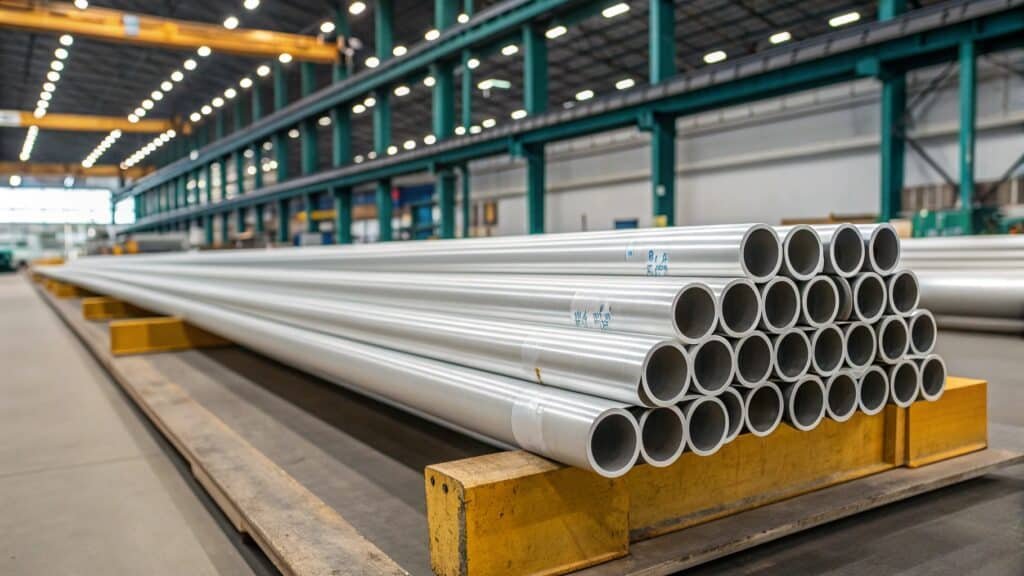
While this level of detail might seem purely academic, it connects to a core principle we care about at SWA Forging: precision and consistency. The periodic table's number is a weighted average found in nature. In our work, we deal with the real-world consequences of mixing elements. When we forge an alloy like 7075, we are working with a precise recipe of aluminum, zinc, magnesium, and copper. The specific atomic masses of each of these elements contribute to the final alloy's density. Our process, from sourcing raw materials to final forging, is controlled to ensure this recipe is consistent all the way through the material. A metallurgist can appreciate the science behind the atomic mass. A machining client appreciates the result: a reliable, predictable material where the density and mechanical properties are exactly what they expect, from the outside surface to the very core of the forged ring or disc.
Is Aluminum Always 3+ in Its Compounds?
You know aluminum forms an oxide layer, but you may wonder about the chemistry. Does it always behave the same way electronically?
Understanding the fundamental chemistry of your material helps you understand its properties, like corrosion resistance3. This knowledge can prevent costly material degradation issues down the line.
Yes, in virtually all its common compounds, aluminum gives up its three valence electrons to achieve a stable electron configuration, resulting in an ionic charge of +3. This strong tendency to form the Al³⁺ ion is what drives its rapid formation of a tough, protective oxide layer (Al₂O₃).
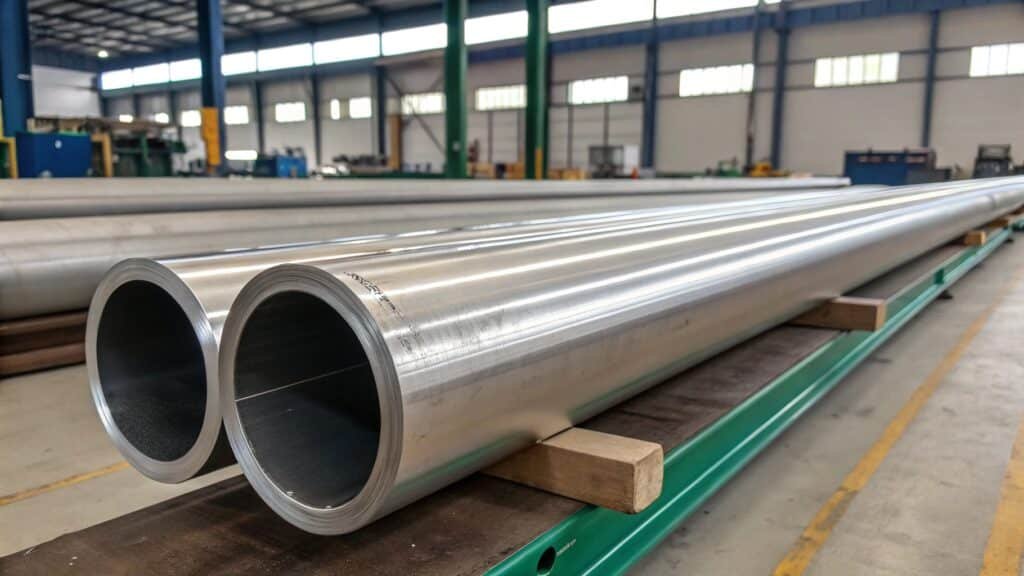
This chemical fact has massive real-world importance for our clients. That Al³⁺ ion is why aluminum naturally resists corrosion so well. As soon as a fresh surface of our forged aluminum is exposed to air, it instantly forms a thin, tough, and transparent layer of aluminum oxide (Al₂O₃). This layer is chemically stable and protects the metal underneath from further oxidation or corrosion. For our trader clients, this means the material has a great shelf life. For our machining clients, it means the final component will have inherent environmental protection. Our forging process contributes to this as well. By creating a non-porous, perfectly uniform surface, we ensure that this protective oxide layer4 is complete and uncompromised. It provides a flawless foundation for further treatments like anodizing, which builds on this natural tendency to create an even thicker and more durable protective coating.
Conclusion
Density is more than a number; it's a guarantee. SWA Forging delivers the certainty of a solid, void-free material, ensuring your project's success from the very first cut.
-
Discover how CNC machining time impacts costs and efficiency in manufacturing processes. ↩
-
Explore the various aluminum alloys and their specific applications in different industries. ↩
-
Understand the factors that influence aluminum's corrosion resistance and how to enhance it. ↩
-
Learn about the protective oxide layer on aluminum and its role in preventing corrosion. ↩