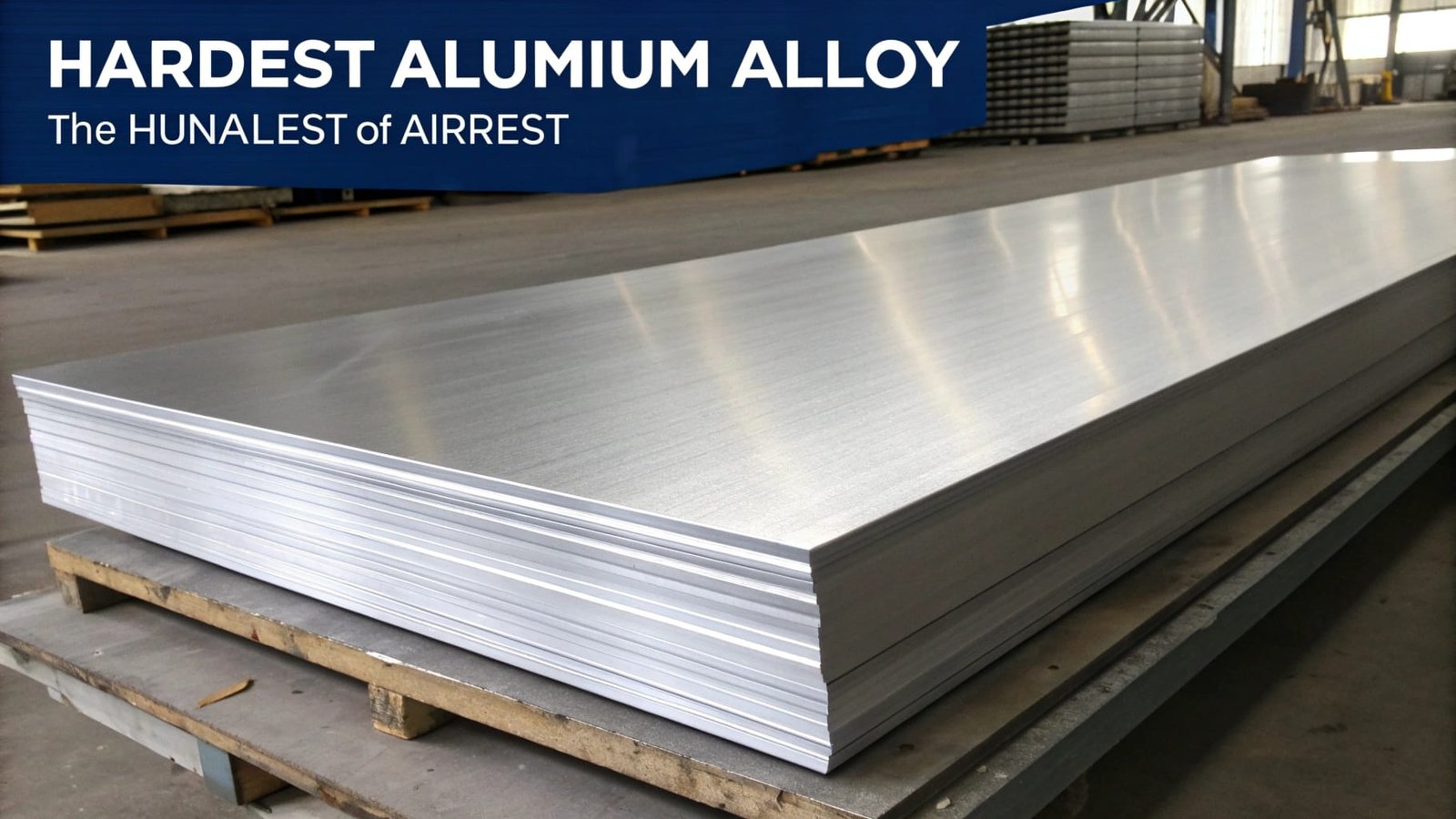
You machine complex parts from high-strength aluminum tubing1, assuming the material's superior properties transfer directly to your component. But you still experience unexpected failures at connection points or sharp corners.
A tube's strength is unidirectional. Machining a complex part from it severs this inherent grain flow, creating weak points. We forge the part's shape, forcing the grain to follow every contour, creating an uninterrupted internal structure—the very definition of reliability.
I worked with an automotive client who was machining suspension knuckles from thick-walled 6061 tubing. On paper, the material was strong enough. In reality, the parts were failing during durability testing right where the steering arm geometry was machined. They were cutting directly across the longitudinal grain structure of the tube, creating a perfect point for a crack to start. I showed them a cross-section of their failed part under a microscope; you could see the severed grain lines. We then designed a near-net shape forging for the knuckle. The forging process forced the metal's grain to flow uninterrupted out along the steering arm, just like muscles in a human arm. The forged part was not only stronger, but we were also able to make it lighter because the strength was inherent in the shape, not just the material.
Is 7075 Aluminum Aircraft Grade?
You see "aircraft grade" used as a marketing term, but you're unsure which alloys truly qualify. This uncertainty makes it hard to specify materials with confidence for your most critical applications.
Yes, 7075 is a premier aircraft-grade aluminum alloy. Its exceptional strength-to-weight ratio2 makes it a top choice for high-stress structural components like wing spars and fuselage frames where performance is critical.
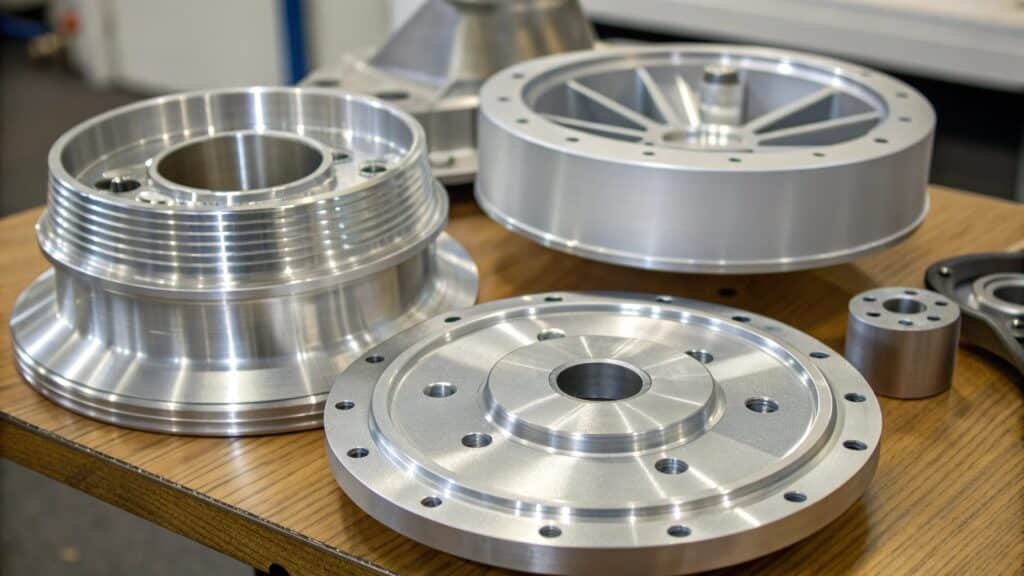
The term "aircraft grade" is more than just a label; it signifies a material that meets the demanding standards of the aerospace industry. Alloy 7075 is a prime example. Its incredible strength comes from using zinc as its primary alloying element, and when heat treated to a T6 temper, its strength-to-weight ratio rivals that of some steels. This allows aerospace engineers to design parts that are both incredibly strong and incredibly light, a vital combination for flight. But it's not just about raw strength. Aircraft-grade alloys must also have predictable fatigue resistance, meaning they can withstand millions of stress cycles without failing. This is where forging becomes so important. Forging 7075 enhances its fatigue life by creating a continuous grain structure that resists crack formation. It ensures that the material's potential, as defined on paper, is fully realized in the final, flight-critical component. Other common aircraft-grade alloys include 2024, known for its damage tolerance, and 6061, used for less critical structural applications.
What Are the Grades of Aluminum Forging?
You need to select an aluminum alloy for forging but are faced with a dizzying array of numbers. Without understanding the main families, choosing the right grade for your project is impossible.
The most common aluminum forging grades are from the 2000, 6000, and 7000 series. Each series offers a different balance of strength, corrosion resistance3, and workability, tailored for specific performance requirements.
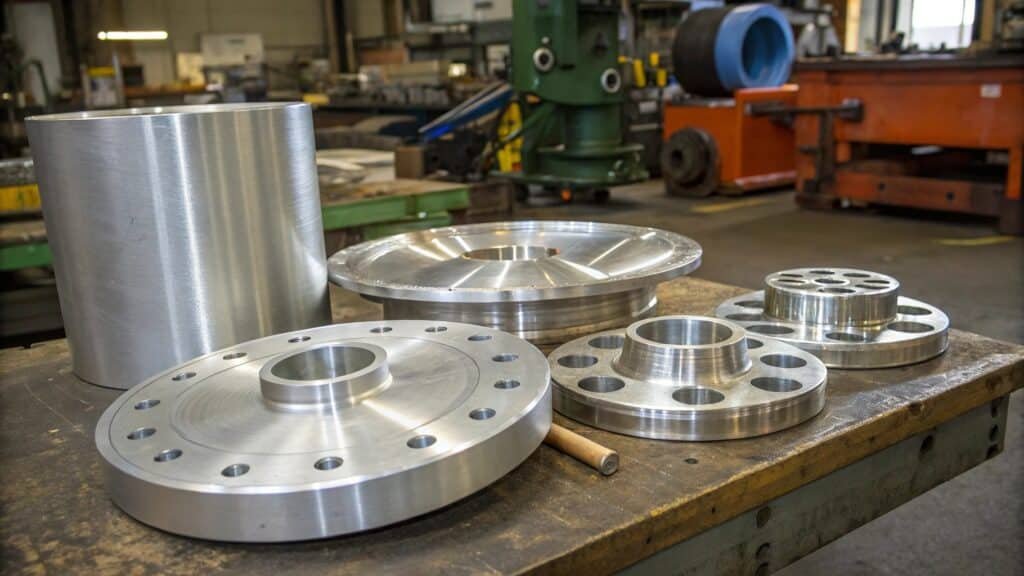
Choosing the right forging alloy is about matching the material's personality to the job's demands. We can group the primary grades into three main families. The 7000 Series, with 7075 and 7050 being the stars, is the high-strength family. Alloyed with zinc, these are the go-to choice for aerospace and high-performance applications where strength-to-weight is the most important factor. The 6000 Series, led by the popular 6061, is the versatile workhorse. Alloyed with magnesium and silicon, it provides a fantastic balance of good strength, great corrosion resistance, and weldability, making it ideal for automotive, marine, and general industrial parts. The 2000 Series, including 2014 and 2024, is another high-strength family that uses copper as its main alloying element. It offers excellent strength and fatigue resistance, especially at elevated temperatures, but requires surface protection as it has lower corrosion resistance. At SWA Forging, our expertise is guiding you to the right grade—whether it's a balanced 6061 part or a high-strength 7075 specialist component.
Aluminum Forging Alloy Families
| Alloy Series | Primary Elements | Key Strengths | Common Applications |
|---|---|---|---|
| 7000 | Zinc (Zn) | Highest Strength, Good Machinability | Aerospace Structures, High-Performance Components |
| 6000 | Magnesium & Silicon (Mg & Si) | Versatility, Corrosion Resistance, Weldability | Automotive, Marine, General Industrial Parts |
| 2000 | Copper (Cu) | High Strength, Good at High Temps, Fatigue Life | Aircraft Engine Parts, Truck Wheels, Structures |
What Makes Aluminum Ductile?
You know that aluminum is strong, but you also hear that it's ductile. Understanding this property is essential to appreciating how we can shape it into complex parts without it breaking.
Aluminum's ductility comes from its "face-centered cubic" (FCC) crystal structure. This atomic arrangement allows layers of atoms to slide over one another easily along multiple planes without breaking their metallic bonds.
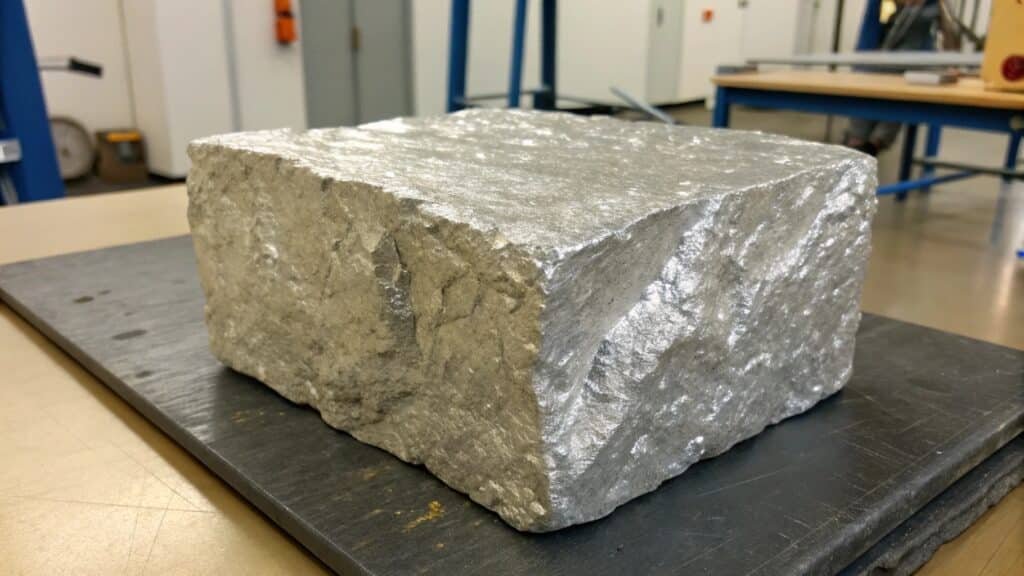
Imagine the atoms in a metal are stacked like oranges in a crate. The way they are stacked determines how the material behaves. In aluminum, the atoms are arranged in a pattern called face-centered cubic (FCC). This is a very stable and symmetrical structure. More importantly, it has numerous "slip planes"—pathways along which layers of atoms can easily slide past each other when a force is applied. Think of it like a deck of cards; it's easy to slide the cards over one another. This atomic-level slipperiness is what we see on a large scale as ductility. It’s the property that allows us to bend an aluminum sheet without it snapping or, in our case, to forge a solid billet into a complex shape. The force from our forging press causes these atomic layers to slip and flow, filling the die cavity. While alloying and heat treating reduce ductility to increase strength, this fundamental FCC structure is what makes aluminum such a wonderfully formable and tough material to begin with.
What Is the Strength of Aluminum Square Tubing?
You need to use aluminum square tubing for a structural project. You must know how strong it is to ensure your design is safe and you are not over-engineering the part.
The strength of aluminum square tubing depends entirely on its alloy, temper, and wall thickness. A 6061-T6 tube is much stronger than a 3003 tube, and a thicker wall will always be stronger.
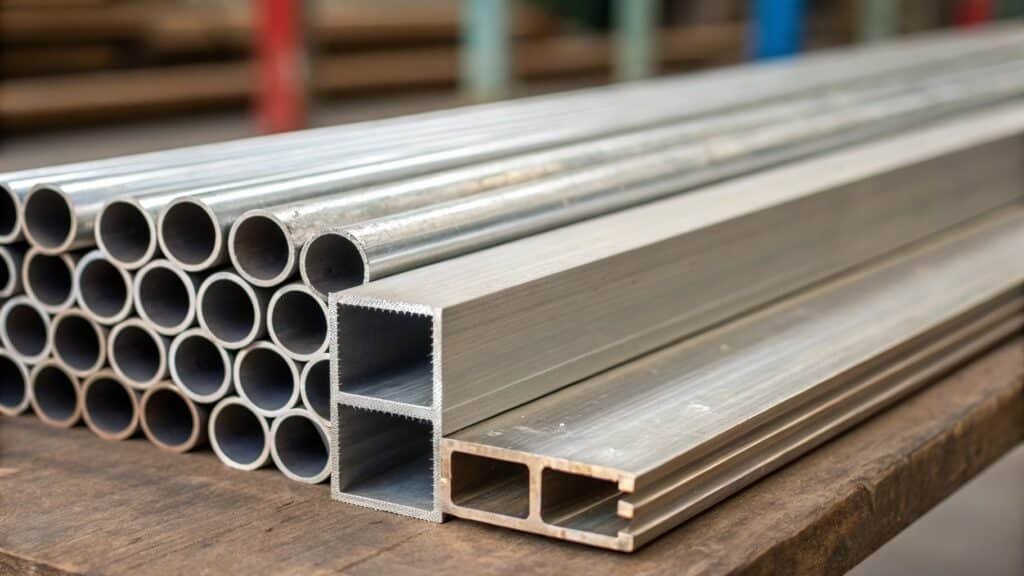
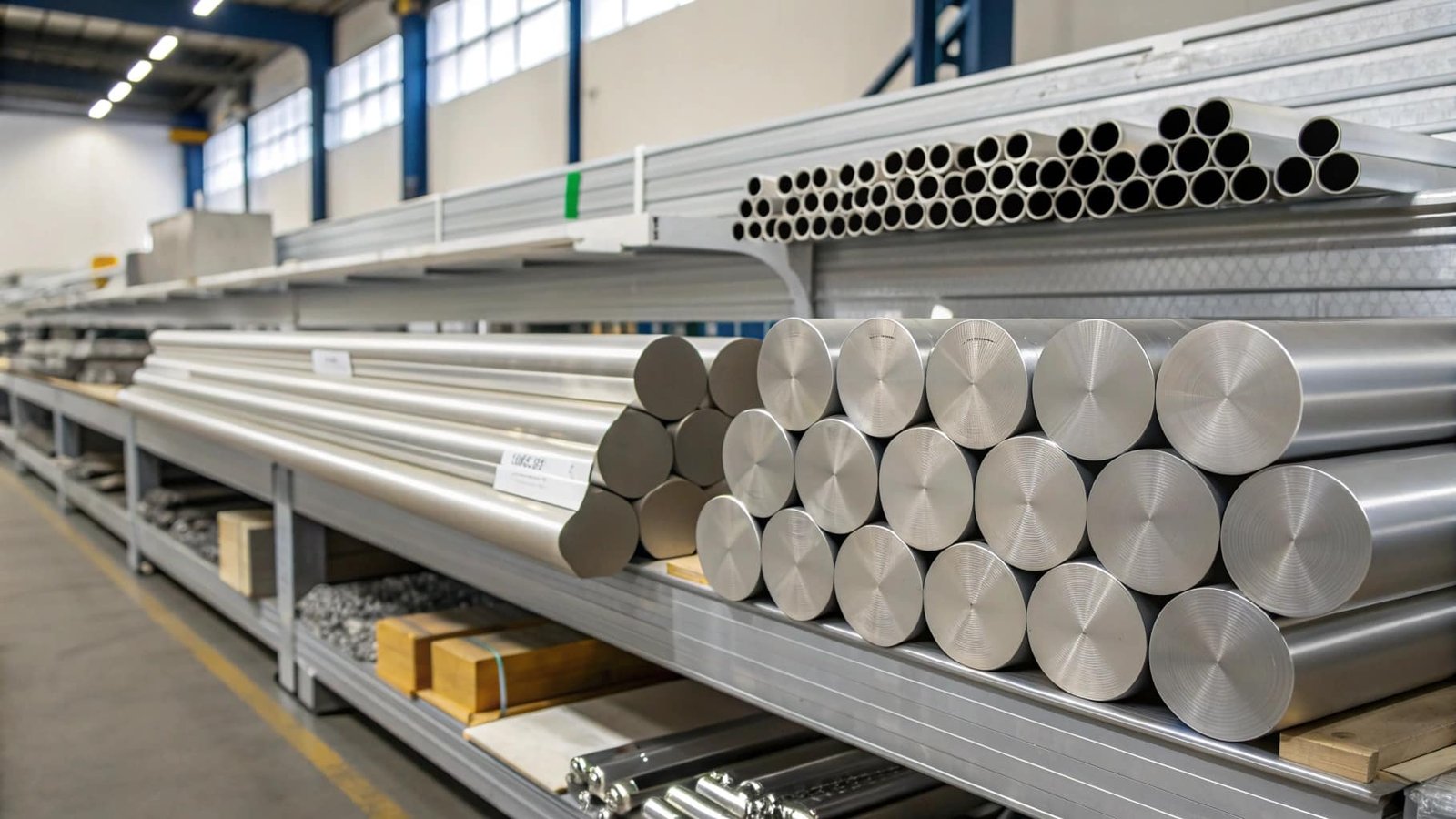
There is no single answer to this question, as "aluminum square tubing" is a generic description. Its strength is a function of three variables. First is the alloy. A tube made from high-strength 7075 alloy will be nearly twice as strong as an identical tube made from the general-purpose 6061 alloy. Second is the temper, or its state of heat treatment. A 6061-T6 (solution heat-treated and artificially aged) tube can be over three times stronger than a 6061-O (annealed or soft) tube. Third, and most obviously, is its geometry—the outside dimensions and the wall thickness. A tube with a 3mm wall is significantly stronger and more resistant to bending and buckling than one with a 1.5mm wall. This is why my initial point is so important. While you can select a tube with high theoretical strength, if you then machine away material to create your final shape, you are fundamentally changing its geometry and compromising that strength. A forged part, however, is designed with its final shape and strength in mind from the very beginning.
Conclusion
Stop relying on the unidirectional strength of tubing for multi-axis, critical parts. Embrace forging to create components with an internal grain structure that provides unparalleled reliability and optimized strength in every direction.
-
Explore how high-strength aluminum tubing can enhance the durability and performance of your components. ↩
-
Understanding strength-to-weight ratio is essential for selecting materials for performance-critical applications. ↩
-
Explore the importance of corrosion resistance in selecting aluminum alloys for different environments. ↩