You see "cast" and "forged" used for car parts and assume they are similar. This misunderstanding can lead to sourcing a weaker component for a high-stress application, risking safety.
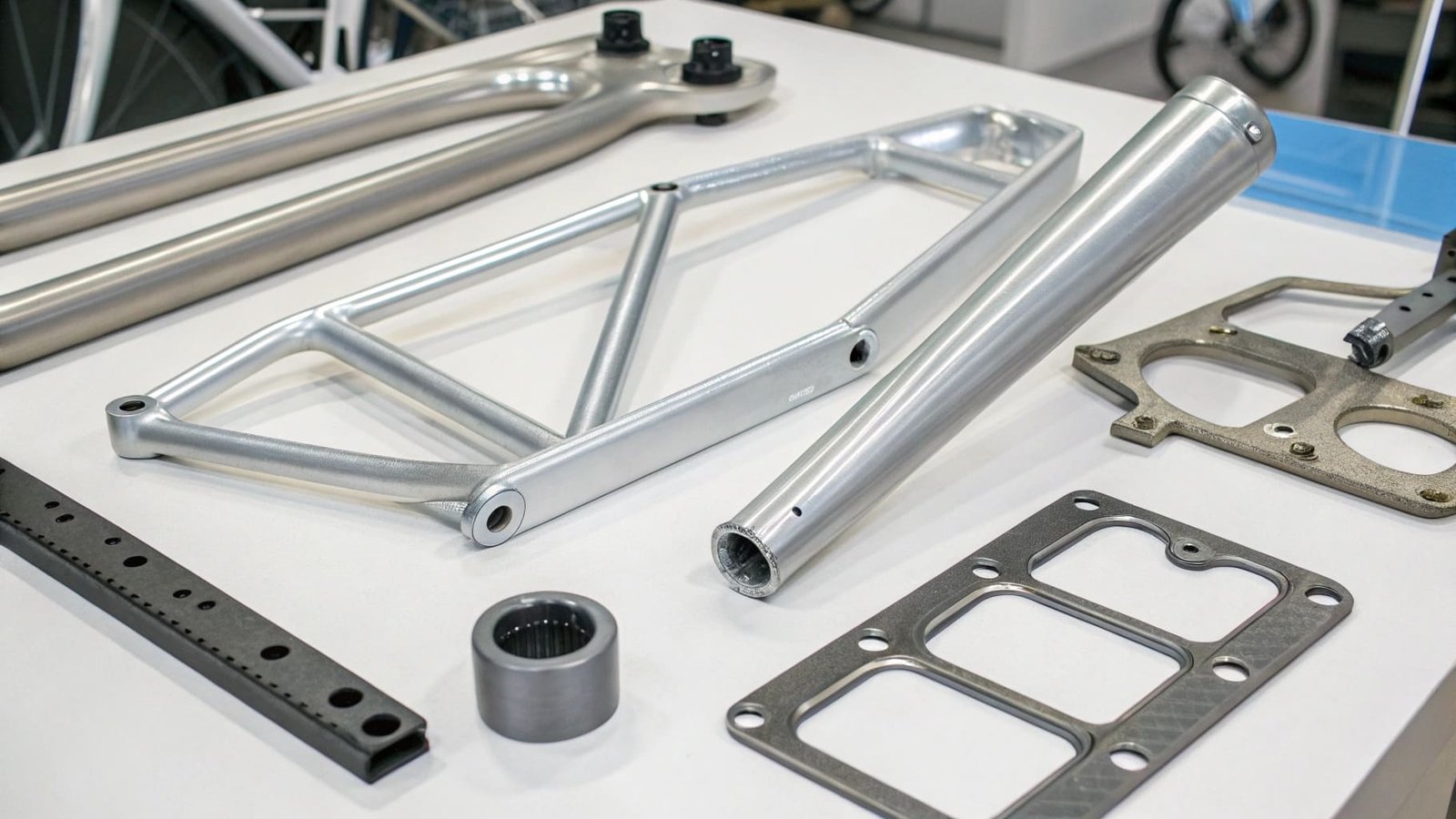
Forged aluminum1 is replacing cast aluminum in critical automotive parts like chassis and suspension because it offers superior strength and fatigue resistance. The forging process creates a predictable, defect-free grain structure, guaranteeing the integrity that safety-critical systems demand.
The shift from casting to forging in the automotive world isn't just about raw strength; it's about certainty. I've seen this firsthand working with our clients who supply the auto industry. Casting is great for creating a lightweight shape, like an engine block or a standard wheel. But forging engineers a specific, predictable, and fatigue-resistant grain structure into that shape. This process guarantees the structural integrity demanded by high-performance and safety-critical systems, which is why it's the future for load-bearing components.
What is the Real Difference Between Cast and Forged Aluminum?
You know that cast parts are cheaper, but you're worried about their reliability. Hidden defects inside a cast component could lead to catastrophic failure under stress, a risk you cannot afford.
The main difference is the manufacturing process and the resulting internal structure. Casting pours liquid metal into a mold, which can trap air pockets. Forging shapes solid metal with extreme pressure, refining its grain structure and eliminating defects.
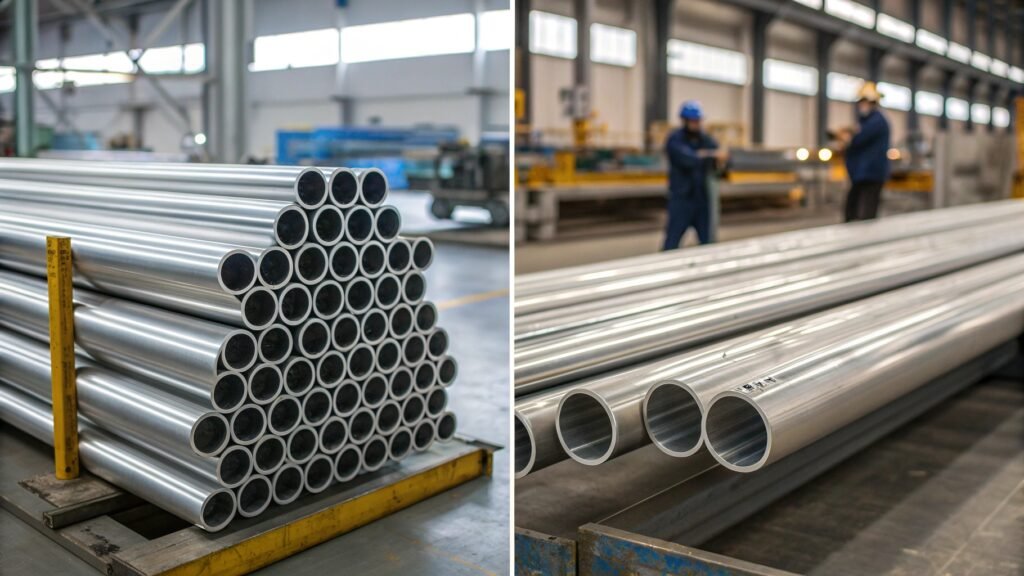
Let's break this down simply. Casting is like making an ice cube. You pour water into a tray and let it solidify. This process can trap tiny air bubbles and create a random crystal structure. In metal, these "bubbles" are called porosity, and they are invisible weak points. Forging, on the other hand, is like a blacksmith shaping a hot piece of steel. At SWA Forging, we use massive presses to apply immense pressure to a solid billet of aluminum. This force compresses the metal, closes any internal voids, and forces the metal's grains to align with the shape of the part. This aligned grain flow creates a component that is significantly stronger, tougher, and much more resistant to failure from vibration and impacts.
Casting vs. Forging: A Quick Comparison
| Feature | Casting | Forging |
|---|---|---|
| Process | Molten metal poured into a mold | Solid metal shaped by compressive force |
| Grain Structure | Random, can have porosity | Aligned, dense, and refined |
| Strength | Good | Excellent, superior strength-to-weight ratio |
| Fatigue Resistance | Lower | Very High |
| Best For | Complex shapes, non-structural parts (e.g., engine blocks) | High-stress parts (e.g., wheels, suspension arms) |
What Aluminum Grade is Best for Forged Wheels?
You need to source material for high-performance wheels. Choosing the wrong alloy could result in a product that is too heavy, cracks under stress, or fails to meet quality standards.
The industry standard for high-performance forged wheels is 6061-T6 aluminum2. It provides the optimal balance of high strength, light weight, excellent fatigue resistance, and good machinability, making it ideal for demanding automotive use.
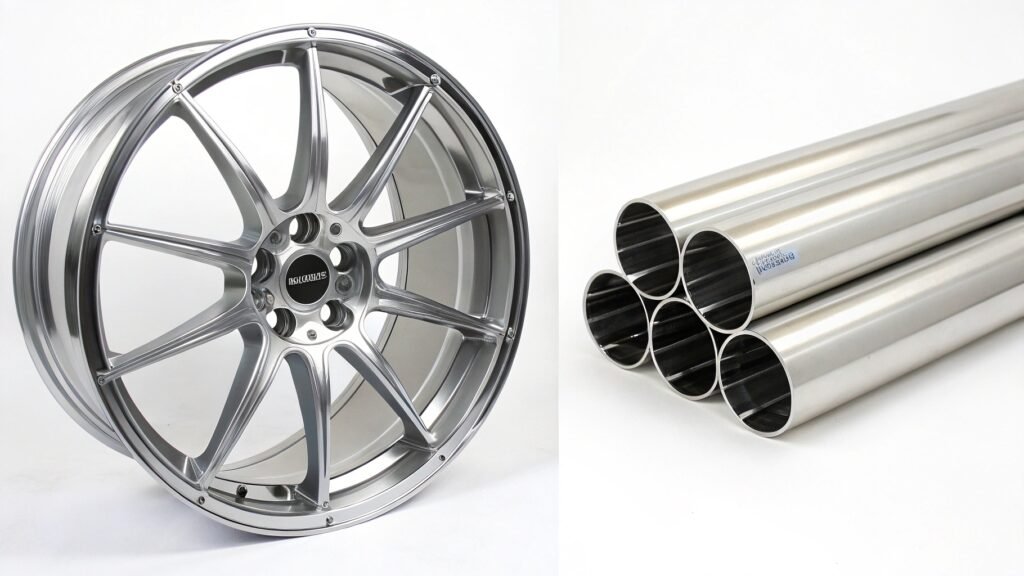
When our clients who manufacture aftermarket wheels come to us, 6061 is the alloy we almost always start with. It’s a true workhorse. The "T6" temper means it has been heat-treated to achieve its highest strength, which is essential for a part that constantly deals with rotational forces, impacts from potholes, and cornering stress. Its light weight is also critical for performance, as reducing unsprung mass improves a car's handling and acceleration. While there are stronger alloys available, like 7075 (often used in aerospace), 6061-T6 offers a much better balance for automotive wheels. It is strong enough for the job, has better corrosion resistance than 7075, and is more cost-effective. This makes it the smartest choice for creating a safe, durable, and high-performance forged wheel.
Why Aren't All Car Bodies Made From Aluminum?
You see that aluminum is light and strong, so it seems logical to build the entire car body from it. This makes you wonder why steel is still so common in the automotive industry.
While many high-end and electric vehicles use aluminum for body panels and structures, steel remains dominant due to its lower material cost, simpler manufacturing processes, and more affordable repair methods.
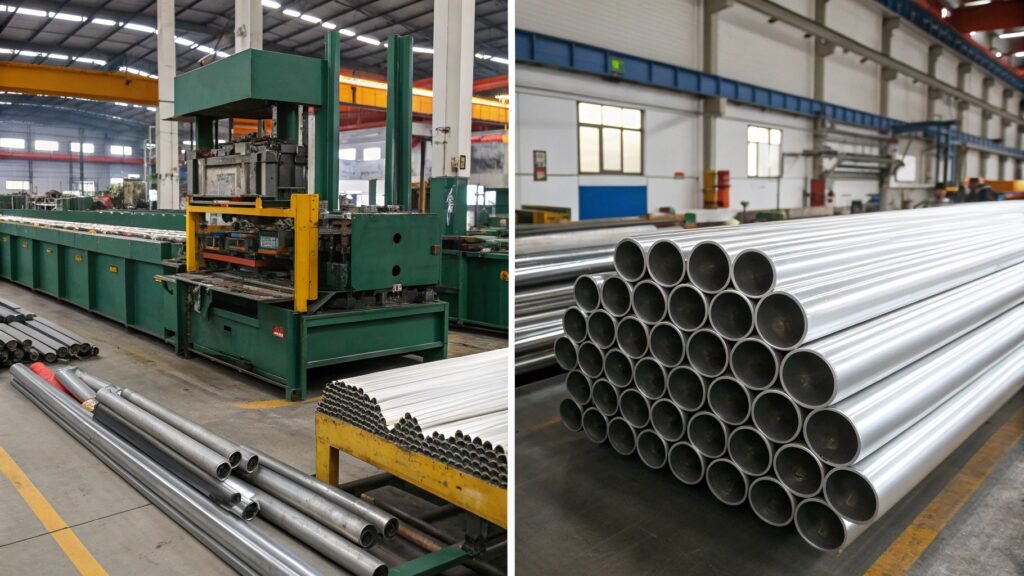
This is a question of economics and manufacturing on a massive scale. First, the raw material cost of steel is significantly lower than aluminum. When you're making millions of cars, that price difference adds up quickly. Second, the manufacturing processes3 are different and more complex for aluminum. Steel can be easily spot-welded, which is a fast and cheap process. Aluminum often requires more advanced and expensive techniques like riveting and adhesive bonding. Third, there is the issue of repair. A dent in a steel fender can be pulled and fixed by almost any body shop relatively cheaply. Repairing an aluminum panel requires specialized training and tools, making it more expensive for the car owner. For luxury brands and EVs where light weight is a top priority to improve performance or battery range, these extra costs are justified. For mass-market cars, steel still provides the best value.
What's the Downside of Using Aluminum Alloys?
You know aluminum has many benefits, but you need a balanced view. To make smart sourcing decisions, you must also understand the potential disadvantages or trade-offs compared to other materials like steel.
The primary downsides of aluminum are its higher initial cost compared to steel, its lower stiffness (modulus of elasticity), and the more specialized techniques required for welding and repair.
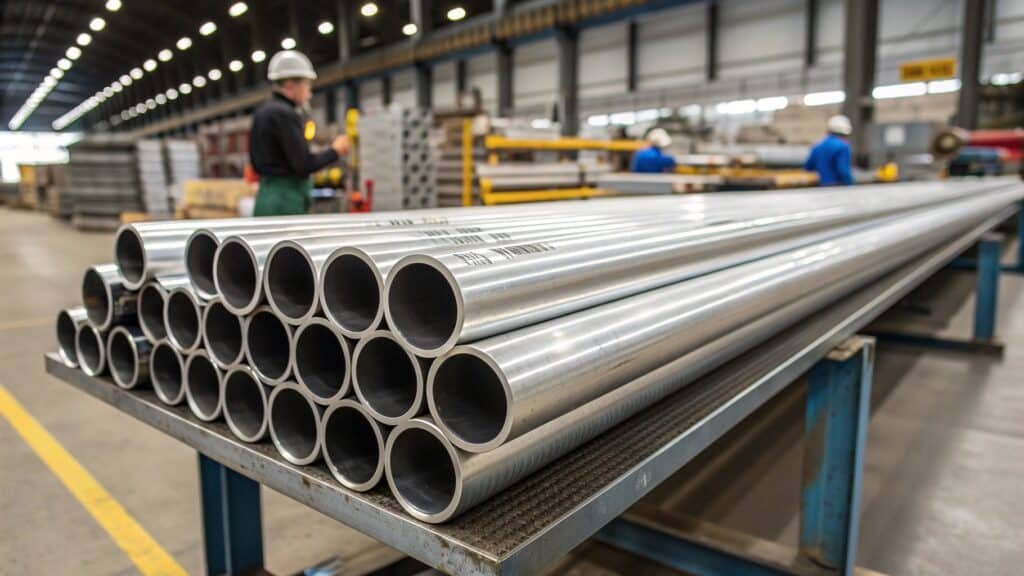
As a supplier, it's important that I'm honest with my clients about the trade-offs. The first and most obvious downside is cost. Pound for pound, aluminum is more expensive than steel. The second consideration is stiffness. For a beam of the exact same size, an aluminum beam will bend more easily than a steel one. Engineers compensate for this by designing aluminum parts with different shapes, like using thicker profiles or hollow sections, to achieve the required rigidity. This can sometimes offset the weight savings. Finally, as we discussed with car bodies, joining and repairing aluminum is a more specialized skill. It requires different equipment and training than working with steel. These factors don't stop aluminum from being an excellent material, but they are important considerations that a sourcing manager must weigh against its incredible benefits of light weight, strength, and corrosion resistance.
Conclusion
The automotive shift to forging is about certainty. Forging engineers a predictable, fatigue-resistant grain structure into a component, guaranteeing the integrity demanded by modern safety-critical chassis systems.
-
Explore the advantages of forged aluminum, which offers superior strength and reliability for critical automotive components. ↩
-
Find out why 6061-T6 aluminum is the industry standard for forged wheels, balancing strength and weight. ↩
-
Learn about the manufacturing processes that influence the choice between aluminum and steel in car production. ↩