You specify a high-strength aluminum plate for a critical component, but you worry about its reliability. A part failing because its strength was only good in one direction is a risk you can't afford.
The strongest aluminum plate is typically 70751, but its strength is directional. The ultimate solution is a forged disc, which delivers uniform, multi-directional (isotropic) strength, guaranteeing the total integrity and performance that a plate simply cannot.
As a manufacturer of forged aluminum, I see this issue all the time. Engineers and machining companies specify a plate based on its listed tensile strength. But they don't always consider how that plate was made. Rolled plate has a hidden weakness. Its strength is not the same in every direction. For a truly reliable, high-performance part, you have to look beyond plate. A forged disc is not a compromise; it's a guarantee of uniform strength, which is why it's the foundation of our business at SWA Forging.
What Is the Strongest Aluminum Plate?
You need the absolute strongest aluminum for a high-stress application. Choosing a material that isn't up to the task could lead to catastrophic failure and damage your reputation.
The strongest commonly available aluminum plate is 7075-T651. Its zinc-based alloy composition allows it to be heat-treated to a tensile strength that rivals some steels, making it the default choice for critical aerospace and high-performance applications.
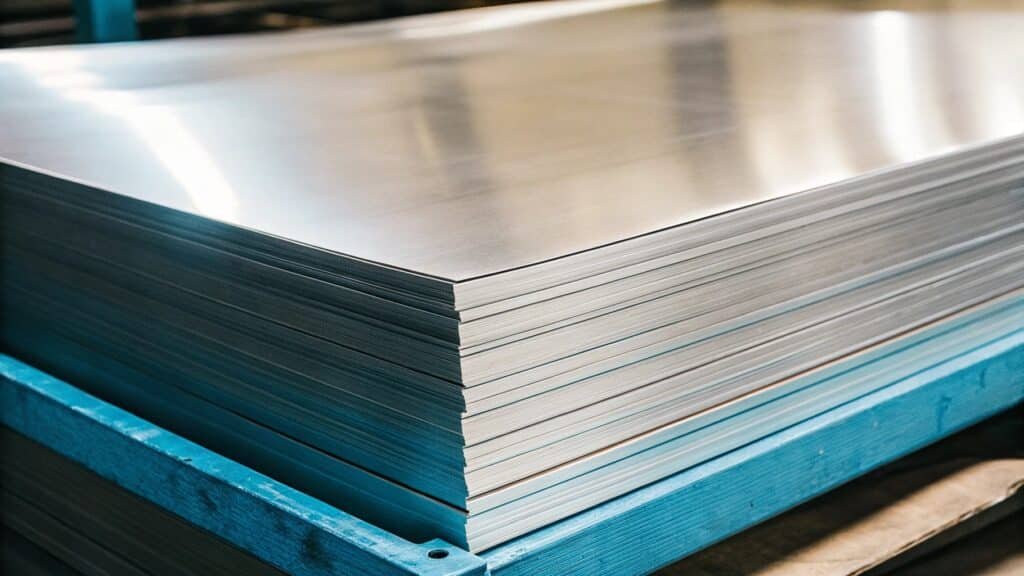
The strength of 7075 plate is impressive, there's no doubt about it. That's why it's so popular. However, this strength comes with a major catch that all traders and machinists should know. Aluminum plate is created by rolling a large billet, which elongates the grain structure in one direction. This means the plate is very strong along its length (longitudinal) but significantly weaker across its width (transverse). This is a manufacturing compromise known as anisotropic properties. For a truly critical component, you cannot have a "weak" direction. This is where a forged disc from SWA Forging provides a superior solution. Our forging process creates a fine, non-directional grain structure, ensuring the material's strength is uniform in all directions. This is called isotropic strength, and it is the key to ultimate reliability.
Strength: Plate vs. Forging
| Property | Rolled Plate (Anisotropic) | Forged Disc (Isotropic) |
|---|---|---|
| Grain Structure | Elongated, linear, like wood grain. | Fine, uniform, and multi-directional. |
| Strength | High in one direction, significantly lower in another. | Uniform and high in all directions. |
| Reliability | Performance depends on part orientation to the grain. | Guaranteed performance regardless of stress direction. |
| Best For | General applications where stress is predictable and linear. | Critical components where failure is not an option. |
Is 6061 or 7075 Aluminum Stronger?
You are choosing between the two most popular alloys, 6061 and 7075. Making the wrong choice means you either overpay for strength you don't need or, worse, specify a part that fails.
7075 aluminum is significantly stronger than 6061. The ultimate tensile strength of 7075-T6 is nearly double that of 6061-T6. This makes 7075 the mandatory choice for applications where the highest strength-to-weight ratio is the primary goal.
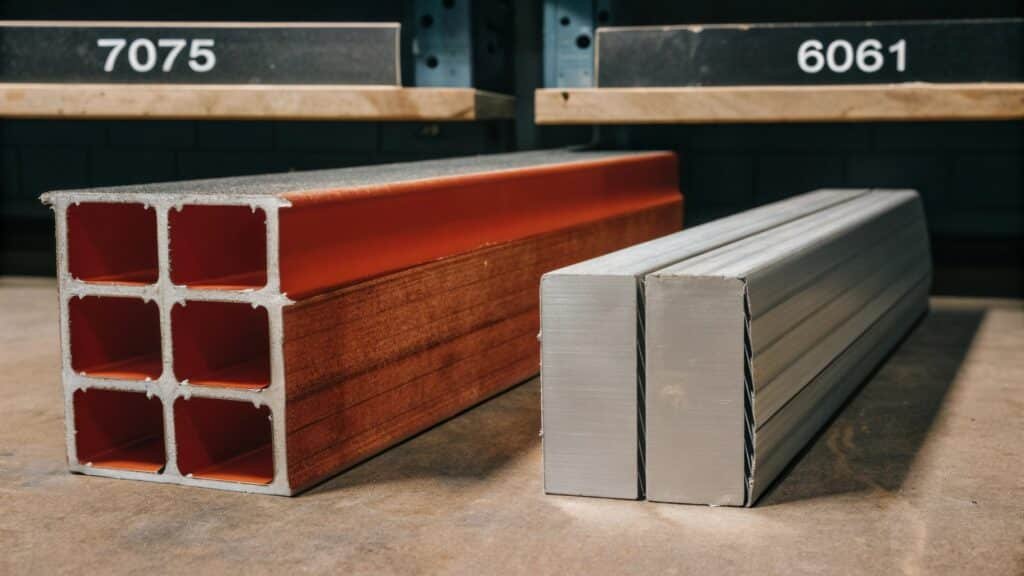
At our facility, we work with both alloys constantly. We advise clients that 6061 is a fantastic, versatile "workhorse" alloy. It has good strength, great corrosion resistance2, and machines beautifully. But when a customer needs maximum performance for an aerospace part or high-end machinery, we always guide them to 7075. The strength difference is simply too large to ignore. However, even with 7075, the "plate problem" remains. If you machine a critical part from a 7075 plate and the real-world stress is applied across its weaker grain direction, you aren't getting the full strength you paid for. This is a hidden risk. A component machined from one of our 7075 forged discs has no weak direction. It delivers the full, published strength of 7075 in every axis, providing the total quality assurance our clients demand.
Is 5052 or 6061 Aluminum Stronger?
You need a material that is easy to form but also has decent strength. You're trying to decide between 5052 and 6061, worried about making the wrong trade-off between formability and power.
6061-T6 aluminum is significantly stronger than 5052-H32. However, 5052 provides superior formability and better corrosion resistance, especially in saltwater. Their strengthening methods are different: 6061 is heat-treatable, while 5052 is a non-heat-treatable, strain-hardened alloy.
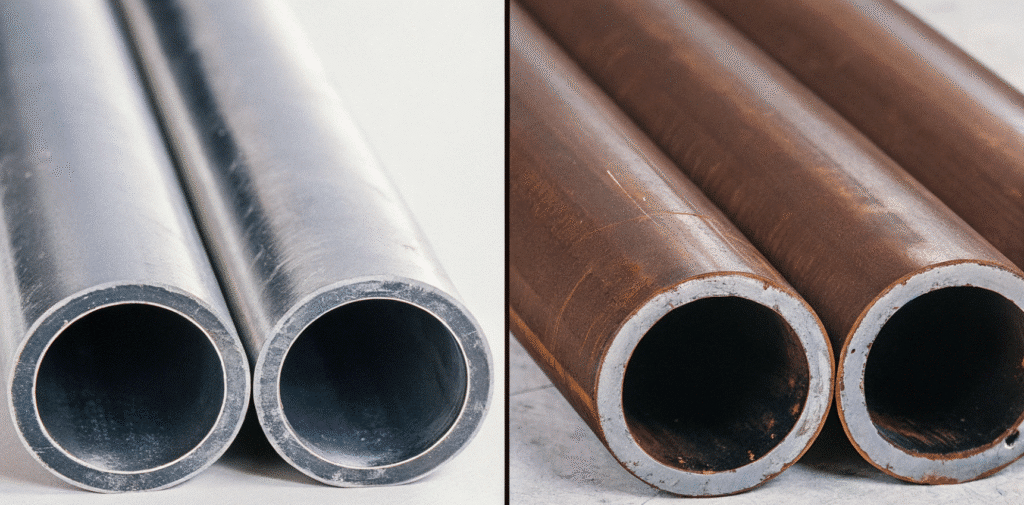
This is a classic "right tool for the job" scenario. We explain to customers that 5052 is the king of sheet metal applications. If you need to bend, form, and weld a chassis or a tank, 5052 is your alloy. But for a structural part that needs to be machined from a thick plate or block, 6061 is the clear winner for strength. You would not use 5052 for a structural bracket. But even with the "stronger" 6061 plate, you are still dealing with directional strength. If your machined bracket experiences forces across the plate's weak grain direction, it can compromise its integrity. By starting with a 6061 forged disc, you eliminate this variable completely. The forging provides uniform strength, so the performance of your machined part is predictable and reliable, which is what every machinist and end-user wants.
Which Aluminum is Stronger, 6061 or 6063?
You're looking at two very similar 6xxx series alloys and see a slight price difference. You wonder if you can save money with 6063, or if you truly need the strength of 6061.
6061 aluminum3 is noticeably stronger than 6063. While both share the same alloying elements, 6061 contains more magnesium, allowing it to be heat-treated to a higher strength. 6063 is prized for its excellent surface finish and extrudability, not its raw power.
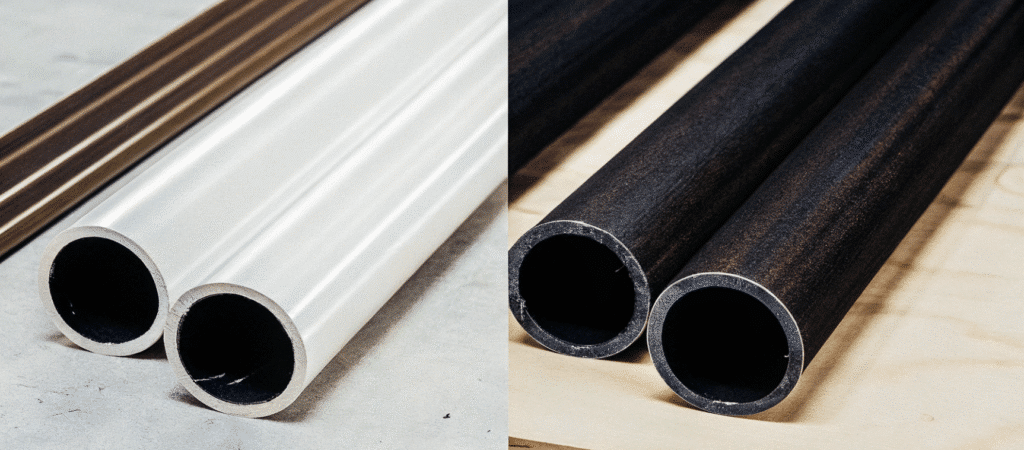
This is a subtle but important distinction. I tell my clients to think of 6063 as the "architectural alloy." It's perfect for extruding complex shapes with a beautiful surface finish, like window frames or decorative trim. Its strength is adequate for those applications. However, 6061 is the "structural alloy." It is designed for machine parts, base plates, and structural components that need to carry a significant load. For any part that you are machining from a plate or block where strength is a key requirement, 6061 is the correct choice over 6063. And, to ensure that the strength you are specifying is the strength you get in the final part, the best practice is to start with a forged disc. A forging ensures you get all of 6061's structural capability in every direction.
Conclusion
Comparing plate strengths is useful, but for critical parts, it's a flawed approach. The strongest, most reliable component comes from a forged disc, which guarantees the uniform, multi-directional integrity a plate cannot.
-
Explore the properties of 7075 aluminum to understand its applications and limitations in critical components. ↩
-
Understand the differences in corrosion resistance among aluminum alloys to make informed material choices. ↩
-
Find out the key characteristics of 6061 aluminum and its suitability for various applications. ↩