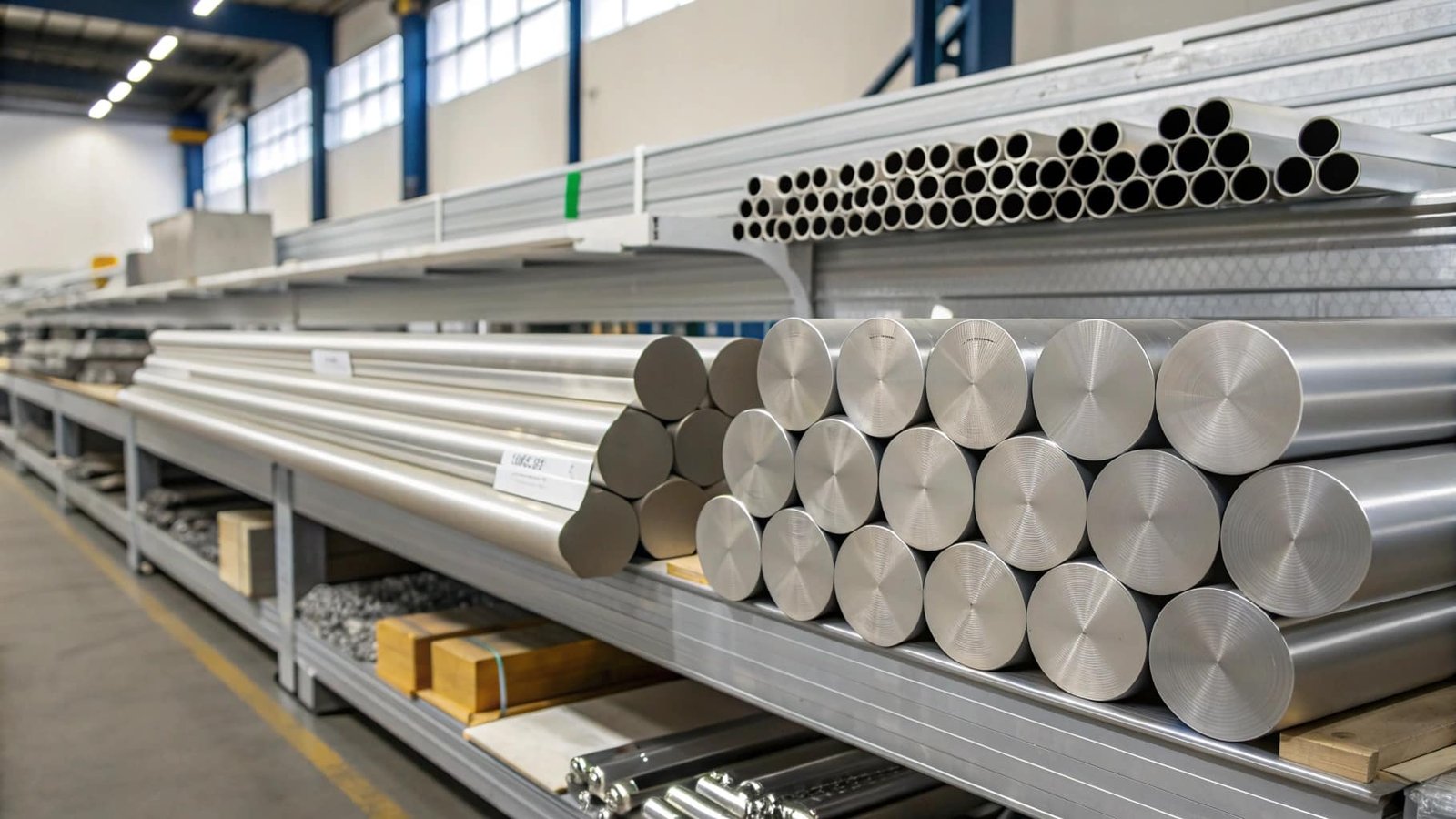
You need a durable aluminum tube for a high-pressure or critical structural part. You assume all tubes are made equal, risking a component failure due to hidden weaknesses in the manufacturing process.
Most aluminum tubes1 are extruded, an efficient but compromising process. For ultimate reliability, the best "tube" isn't a tube at all—it's a component machined from a solid forged ring, guaranteeing an integrity that standard tubing cannot match.
I often speak with machining clients who are looking to source high-quality tubing. The conversation almost always turns to the manufacturing method. While extrusion is the standard, it creates a product with a specific limitation: a linear grain structure. At SWA Forging, we offer a better path for critical applications. We provide solid forged rings. When a client machines their cylindrical component from one of our forgings, they get a part with a continuous, refined grain structure. This delivers the uniform, multi-directional strength that is absolutely essential for parts that cannot fail.
How Are Aluminium Tubes Manufactured?
You see "extruded aluminum tube2" on a spec sheet, but you're not sure what that process involves. This lack of knowledge means you might be specifying a material with inherent weaknesses for a high-stress role.
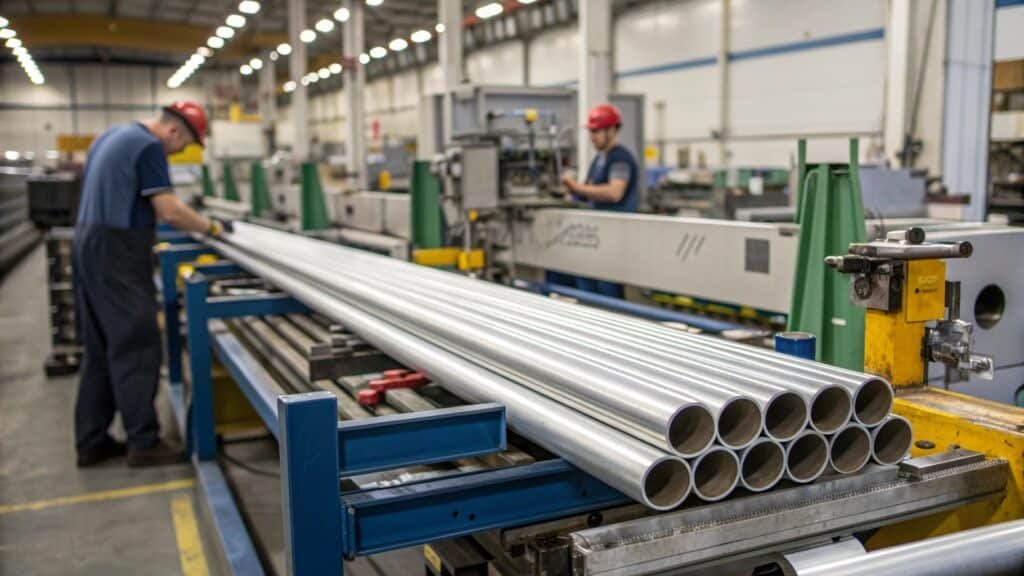
Aluminum tubes are typically manufactured through extrusion. In this process, a heated, solid aluminum billet is forced under immense pressure through a die, creating the final tube shape. This is fast and efficient but creates a linear grain structure.
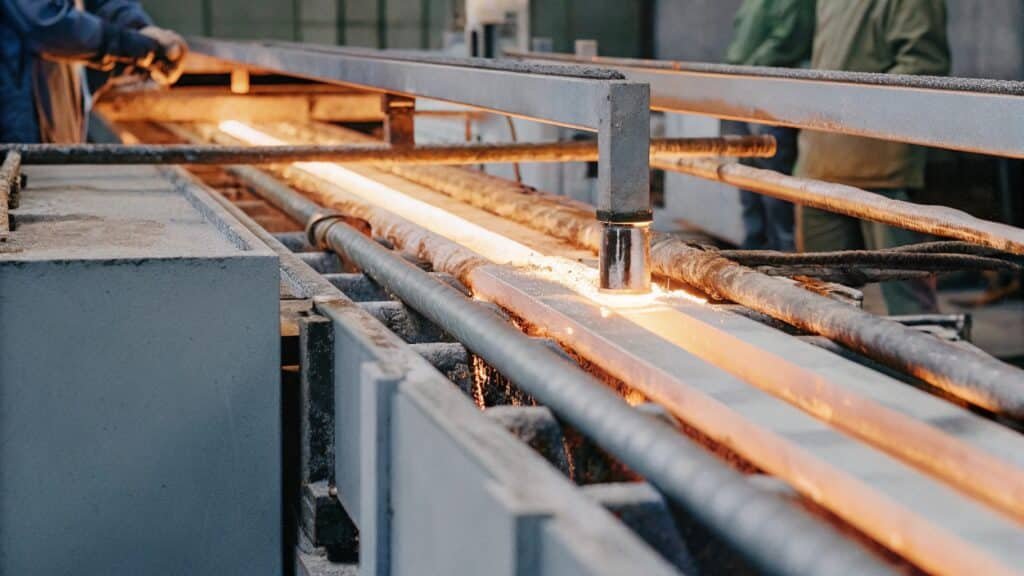
The extrusion process is truly a marvel of manufacturing, and it's perfect for a wide range of applications like window frames, electrical conduit, or railings. The process is straightforward: a large press pushes a softened aluminum billet through a shaped opening (a die). For a tube, the die includes a piercing mandrel in the center that hollows out the billet as it passes through. The problem is that this process stretches the aluminum's internal grain structure in one direction, much like the grain in a piece of wood. This is fine for simple applications. But for a high-pressure hydraulic cylinder or a critical rotating part, that linear grain is a potential failure point. The material is strong along its length but weaker against forces from the side.
How Do You Make Seamless Aluminum Tubing?
You need a tube for a high-pressure system and know that a seam is a built-in weak point. You look for seamless tubing, but you wonder if even that is good enough for your most critical applications.
Seamless aluminum tubing is made by piercing a solid, heated billet and then extruding it over a mandrel. This process avoids a welded seam, making it superior for containing pressure. However, for ultimate integrity, a part machined from a solid forging is even better.
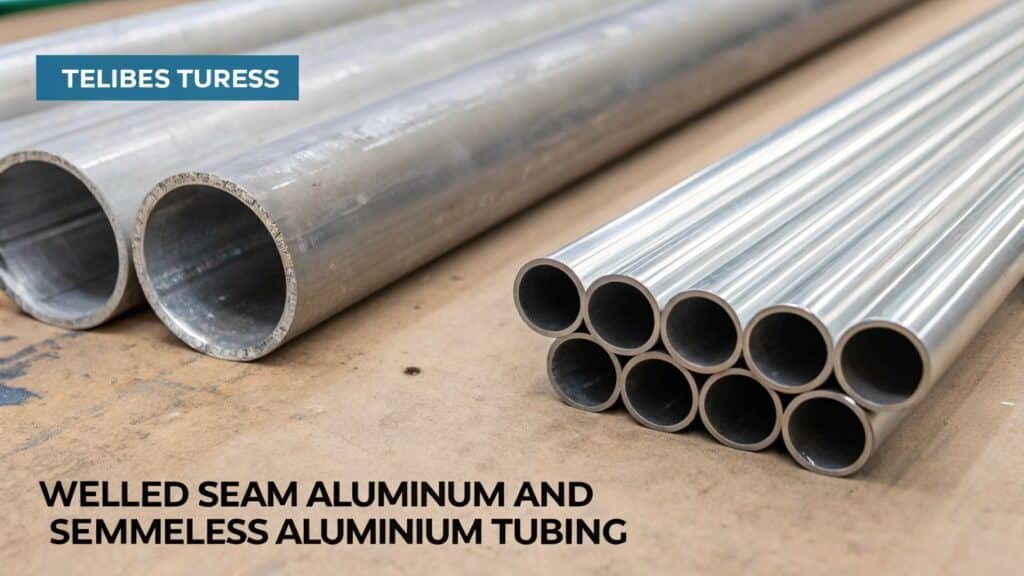
When talking to our machining customers, we always clarify the different types of "seamless." The most basic tube is made by rolling a flat sheet and welding the seam, which is obviously not suitable for high pressure. Standard seamless tubing solves this by being extruded from a solid block, eliminating the weld. This is a huge improvement. But it still has the linear, directional grain flow that comes from the extrusion process. This is the hidden weakness. The solution we provide at SWA Forging is the ultimate seamless component. By machining your part from one of our solid forged rings, you get a piece of metal with a refined, non-directional grain structure. It has no seams, and it has no directional weakness. It is uniformly strong in every direction.
Integrity Levels of Cylindrical Parts
| Manufacturing Method | Key Feature | Primary Limitation |
|---|---|---|
| Welded Tube | Inexpensive and easy to produce. | The welded seam is a significant structural weak point. |
| Extruded Seamless Tube | No weld seam, good for containing pressure. | Directional grain flow creates anisotropic weakness. |
| Machined Forged Ring | No seam and uniform, non-directional grain flow. | No structural limitations; offers ultimate integrity. |
How Is the Base Aluminium Made Step-by-Step?
You're focused on the shape of the tube, but you forget about the material itself. The quality and type of the aluminum alloy3 are just as important as the manufacturing method for the final part's performance.
First, bauxite ore is mined and refined into alumina powder. Second, this alumina is dissolved and subjected to electrolysis, an intense electrical current that separates out pure liquid aluminum. Finally, this aluminum is mixed with alloying elements and cast into billets.
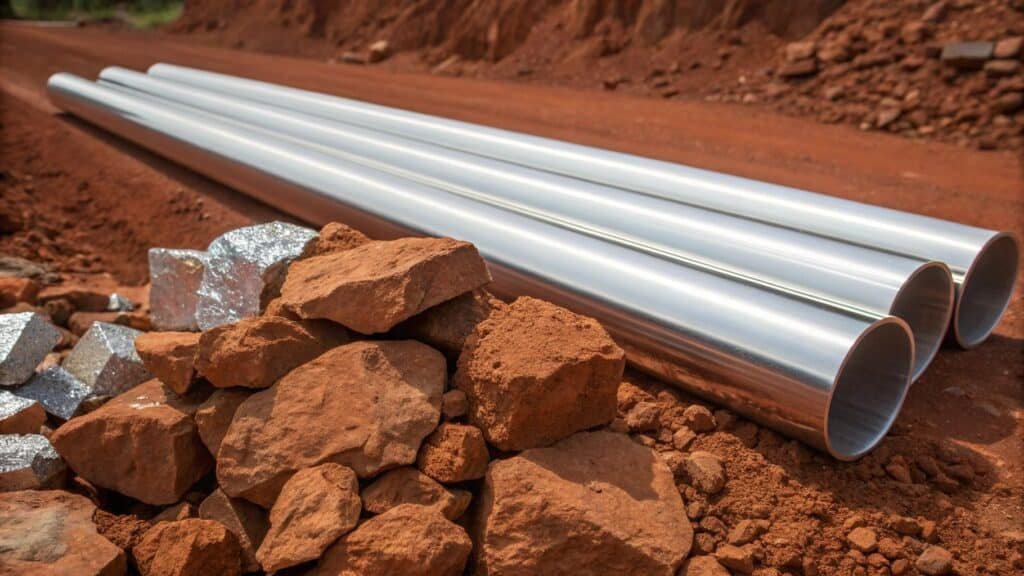
Understanding this process is key to appreciating quality. As a forging company certified with ISO 9001 and ISO 14001, we are obsessed with the quality of our starting material. We can't create a high-integrity forged ring if we start with a poor-quality billet. The final step—alloying—is where the magic happens. This is where we add elements like zinc, magnesium, or copper to create specific alloys like 7075 or 6061. When our trading partners or machining clients request a specific alloy, they are relying on us to ensure that this fundamental process was done correctly. We provide product quality certificates with every order to prove it, and we can arrange third-party certification from SGS or BV to give our clients complete peace of mind. The best tube starts with the best aluminum.
What Is the Manufacturing Process of a Collapsible Tube?
You might see a soft, collapsible aluminum tube and wonder how it relates to the strong, structural tubes used in industry. The processes and end goals are completely different, highlighting the versatility of aluminum.
A collapsible tube is made through impact extrusion. A small, soft aluminum slug is placed in a die and struck with a punch at high speed. The metal flows backward up and around the punch, instantly forming the thin-walled tube.
This process is fascinating, but it's important to understand it is for a completely different class of product. It uses very soft, pure aluminum and is designed to create a thin, pliable container. The goal is easy collapsibility. This is the exact opposite of what our industrial clients need. They require strength, rigidity, and the ability to withstand immense pressure and stress. While both products start with aluminum, the path they take is totally different. We focus on taking high-strength aluminum alloys and using the forging process to align their internal structure for maximum power. A collapsible tube is designed to fail easily under hand pressure; our forged rings are designed never to fail under industrial pressure.
Conclusion
Standard tubes are made by extrusion, a process with limits. For critical parts, the superior method is to machine your component from a solid forged ring, which delivers the ultimate, uniform integrity you need.
-
Explore the advantages of aluminum tubes for various applications, including their strength and lightweight properties. ↩
-
Learn about the extrusion process and its implications for the strength and quality of aluminum tubes. ↩
-
Explore the various aluminum alloys and their specific applications in manufacturing. ↩